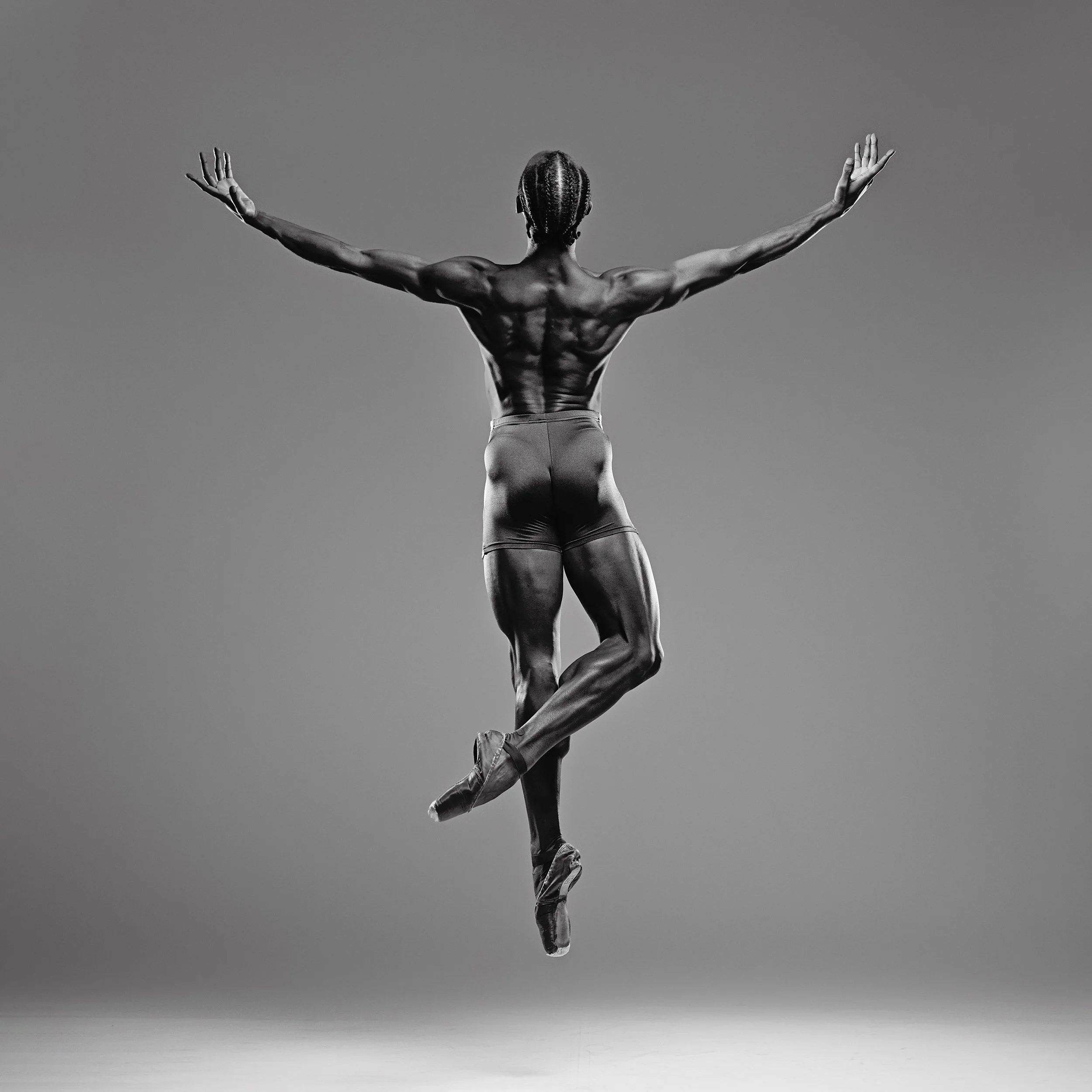
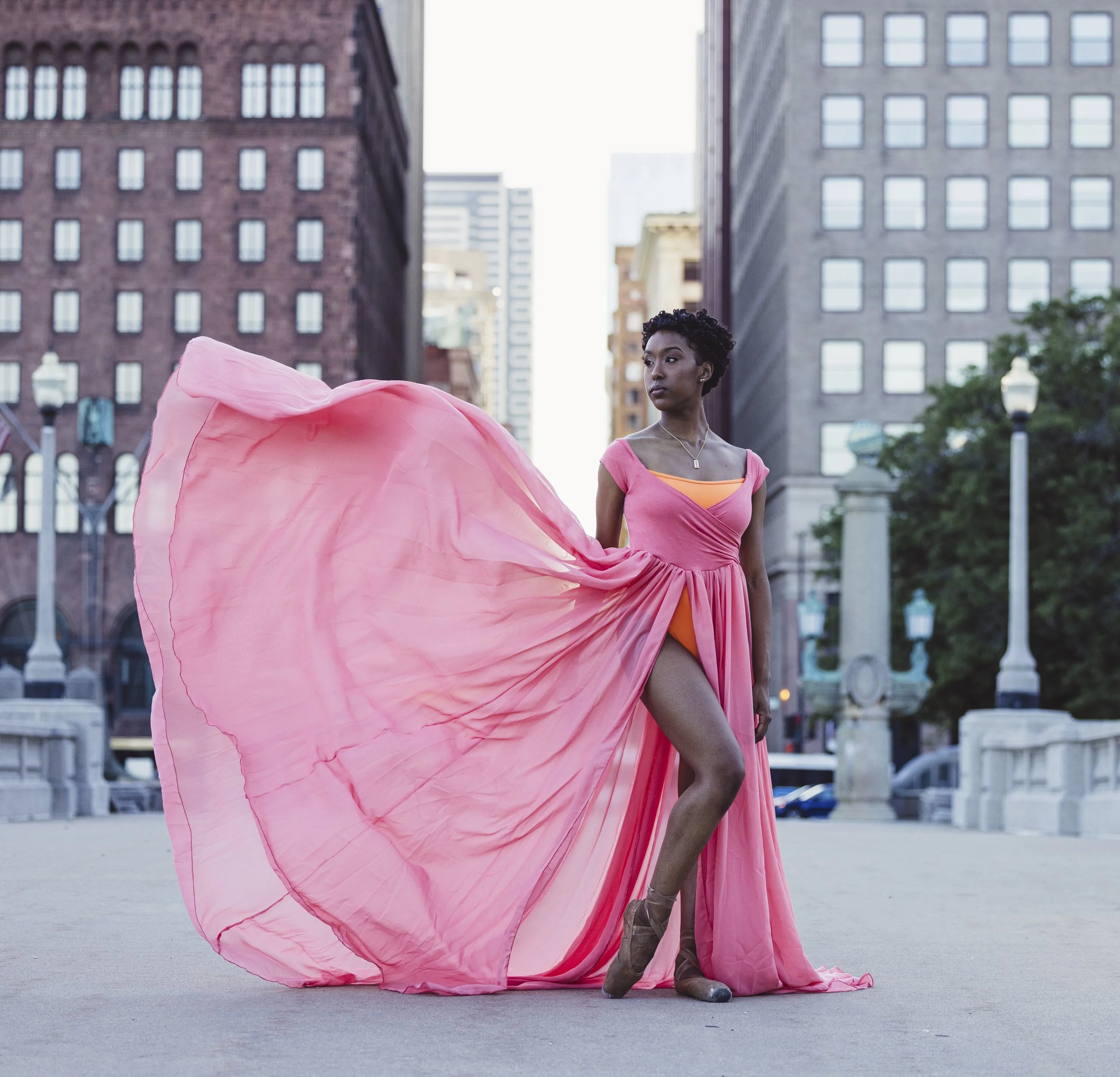
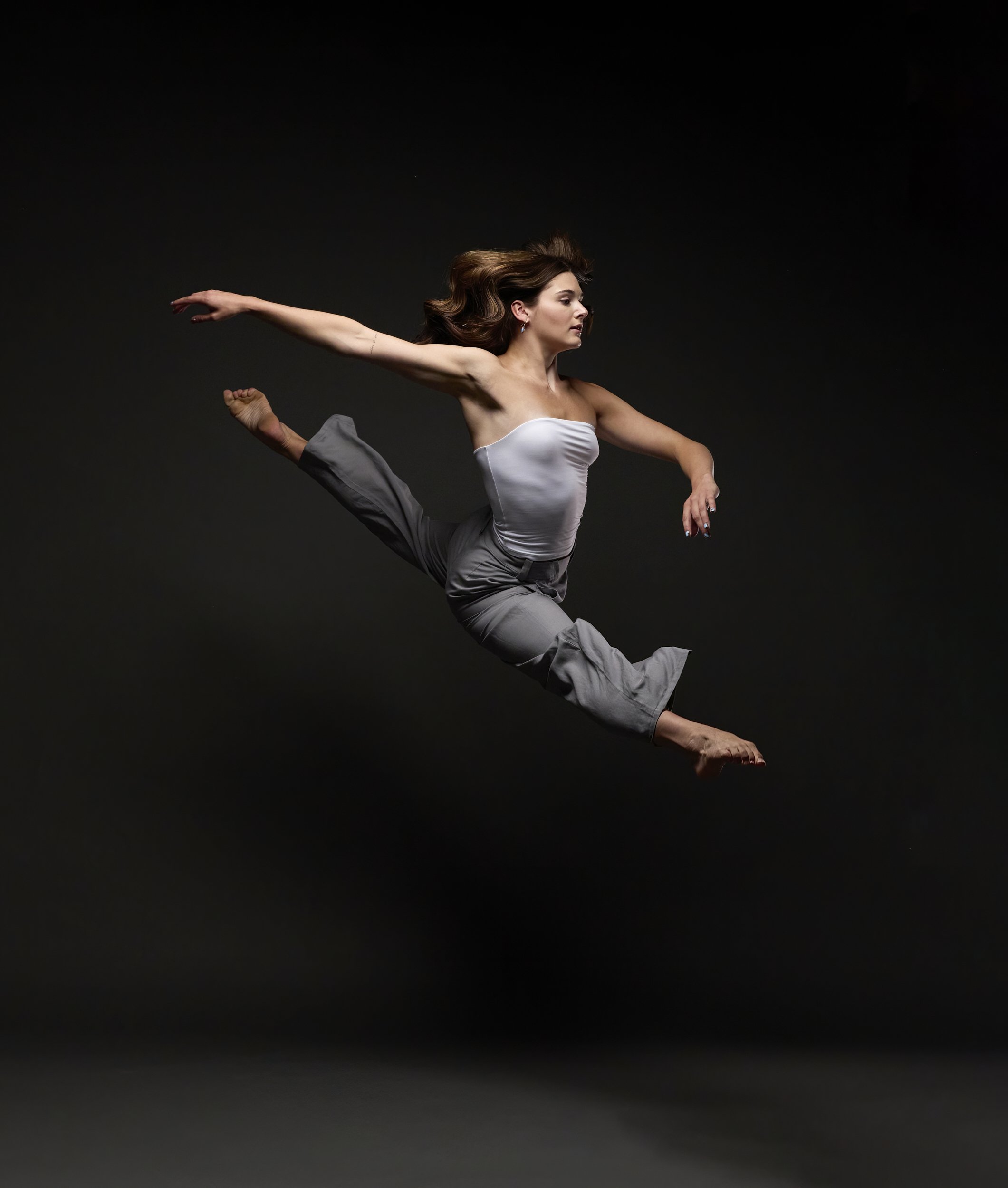
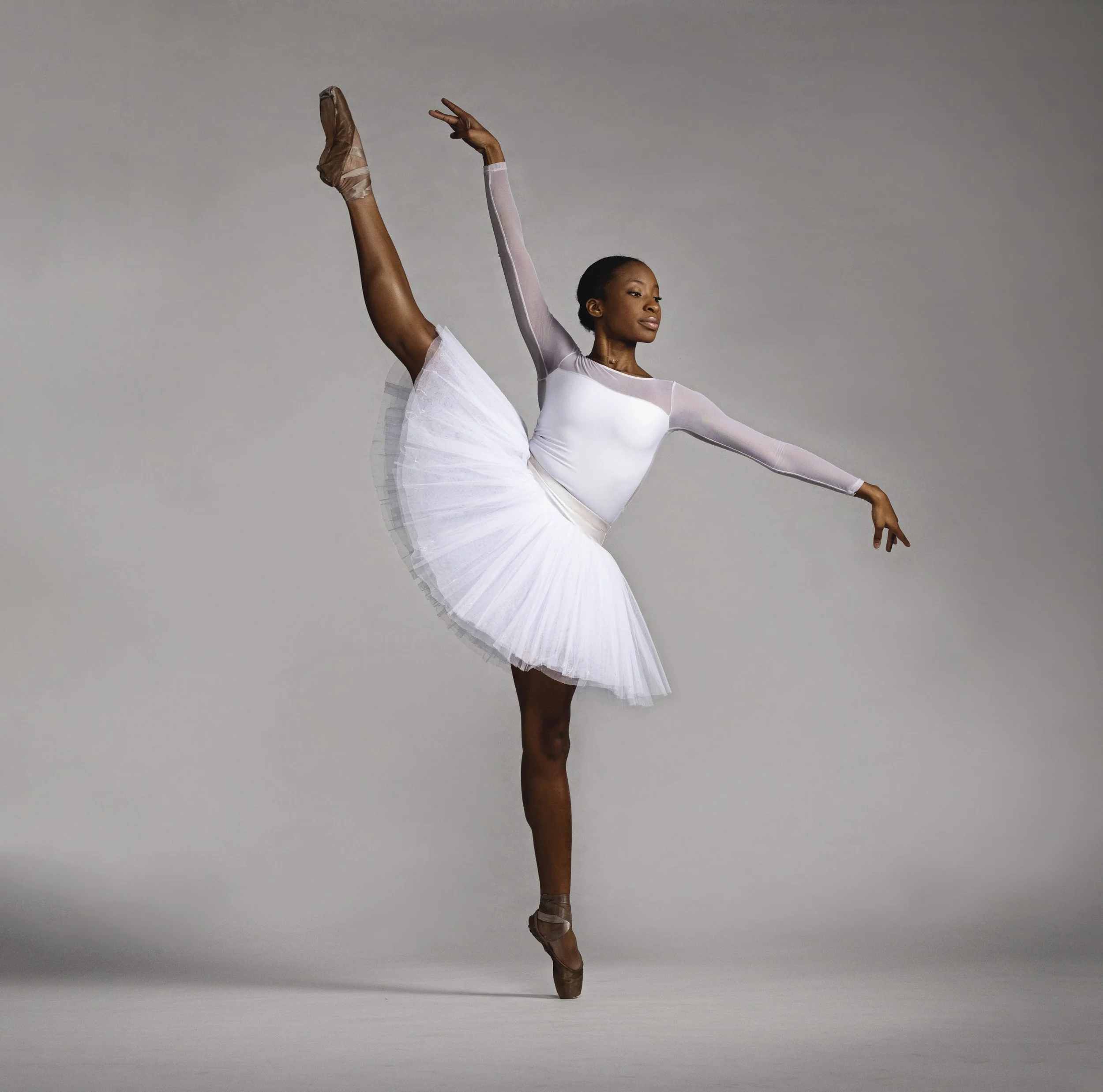
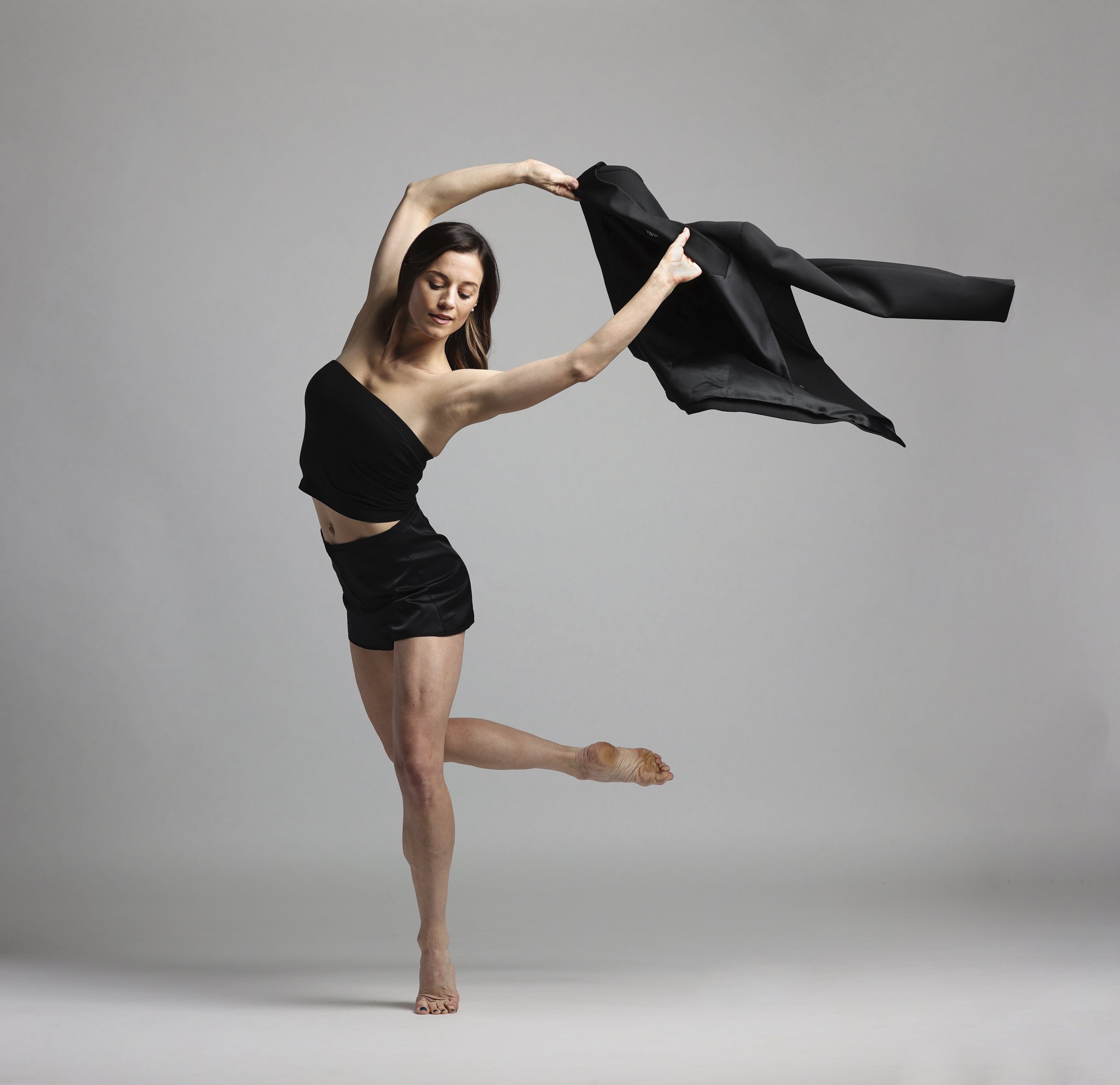
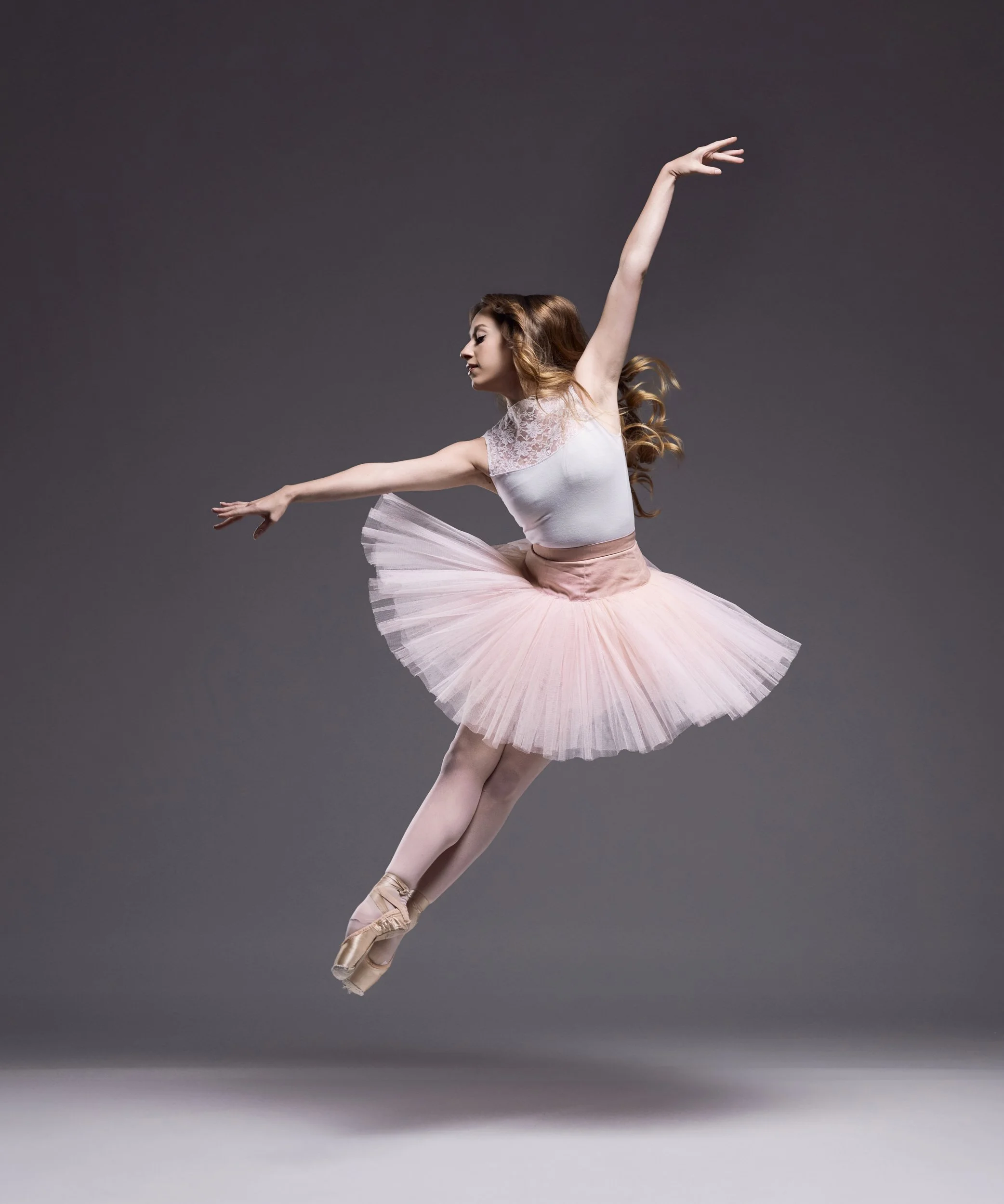
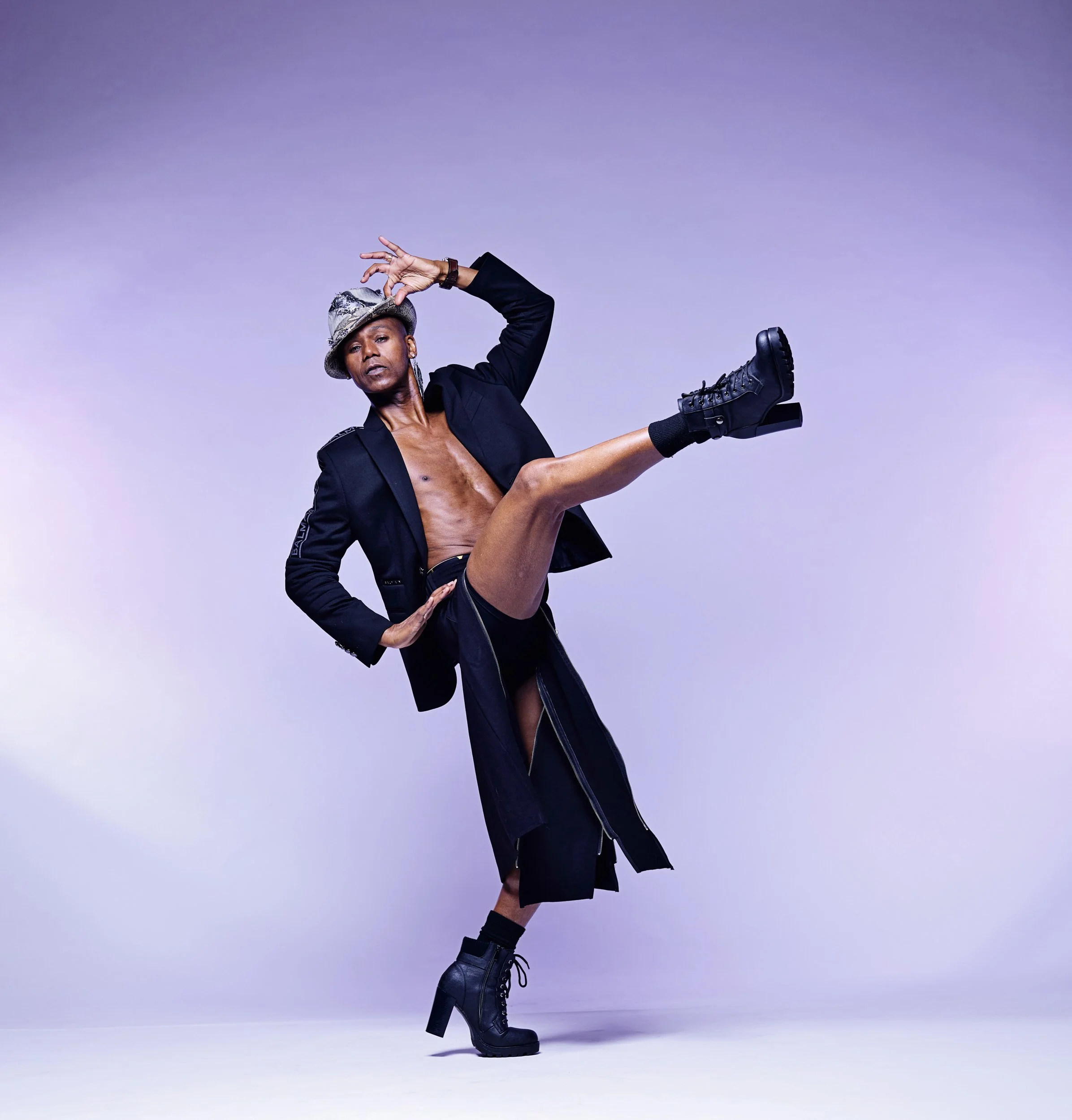
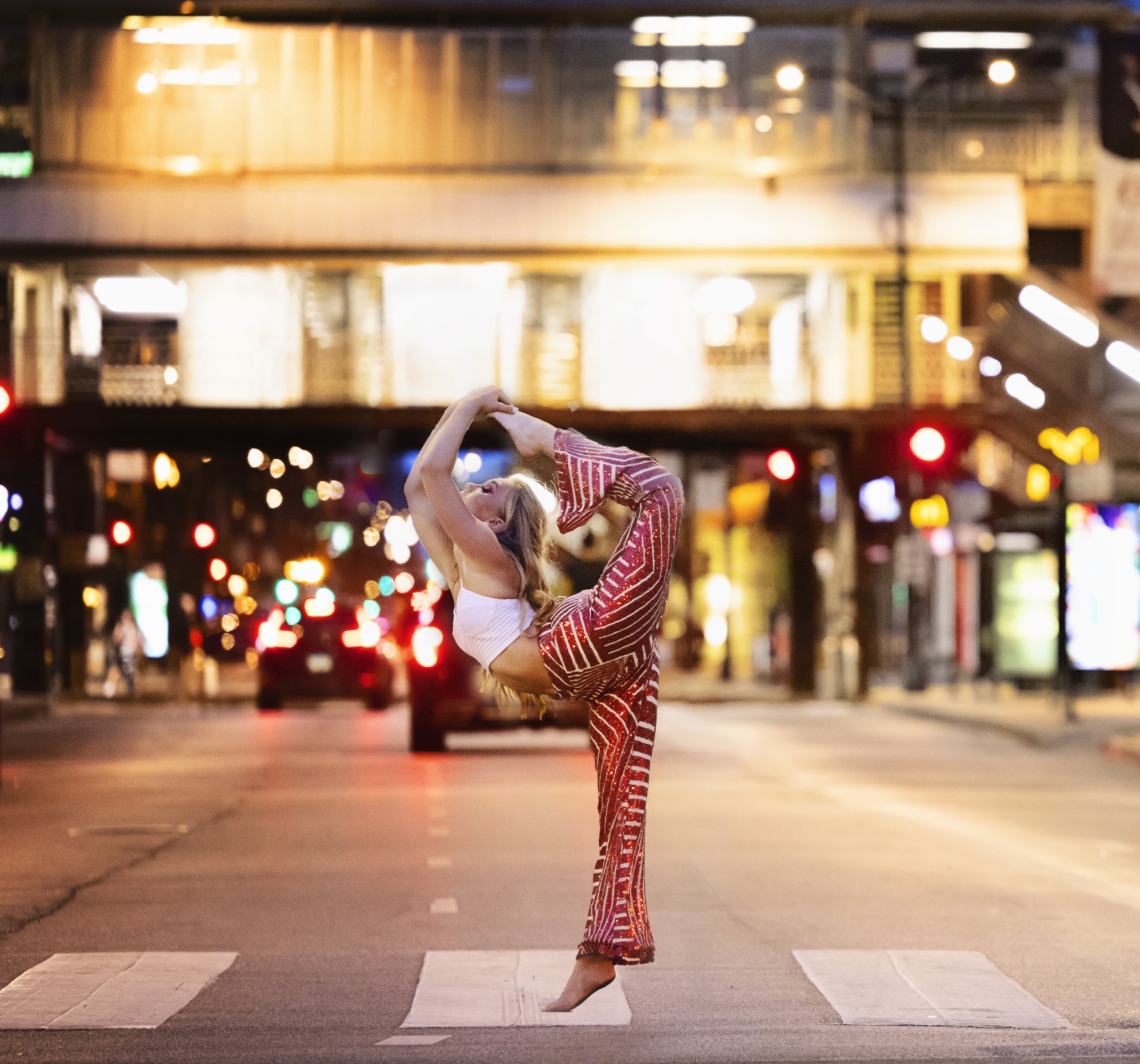
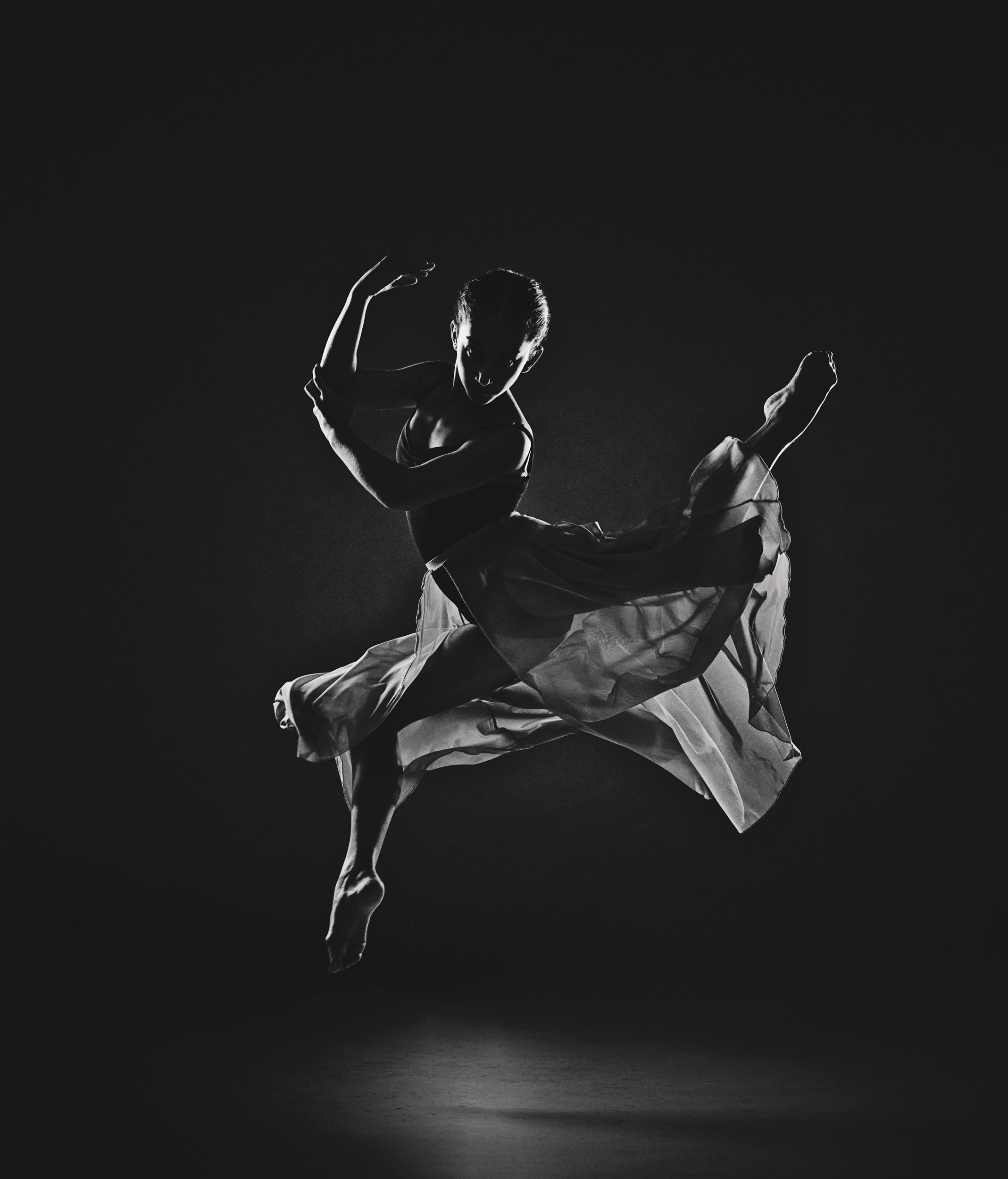
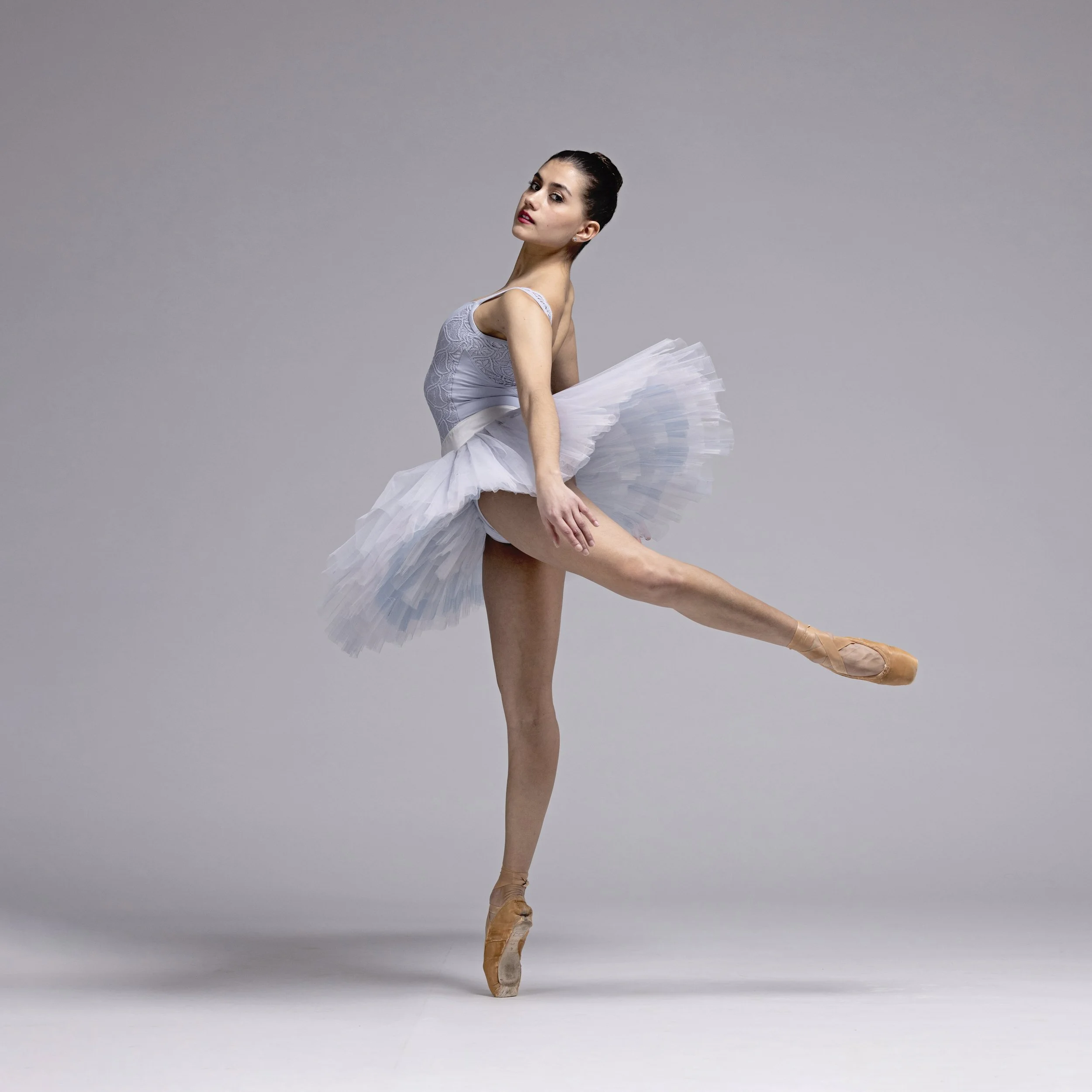
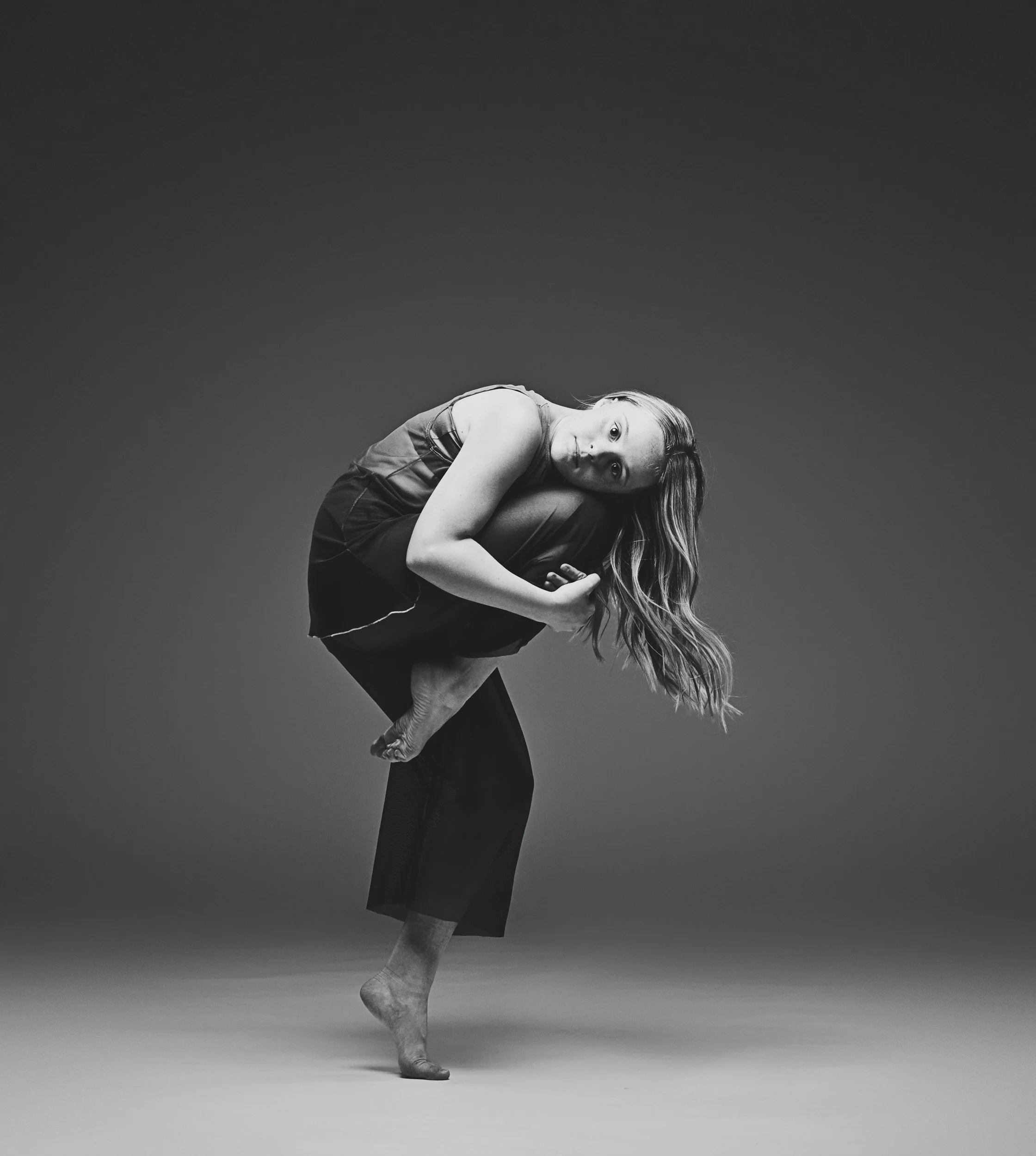
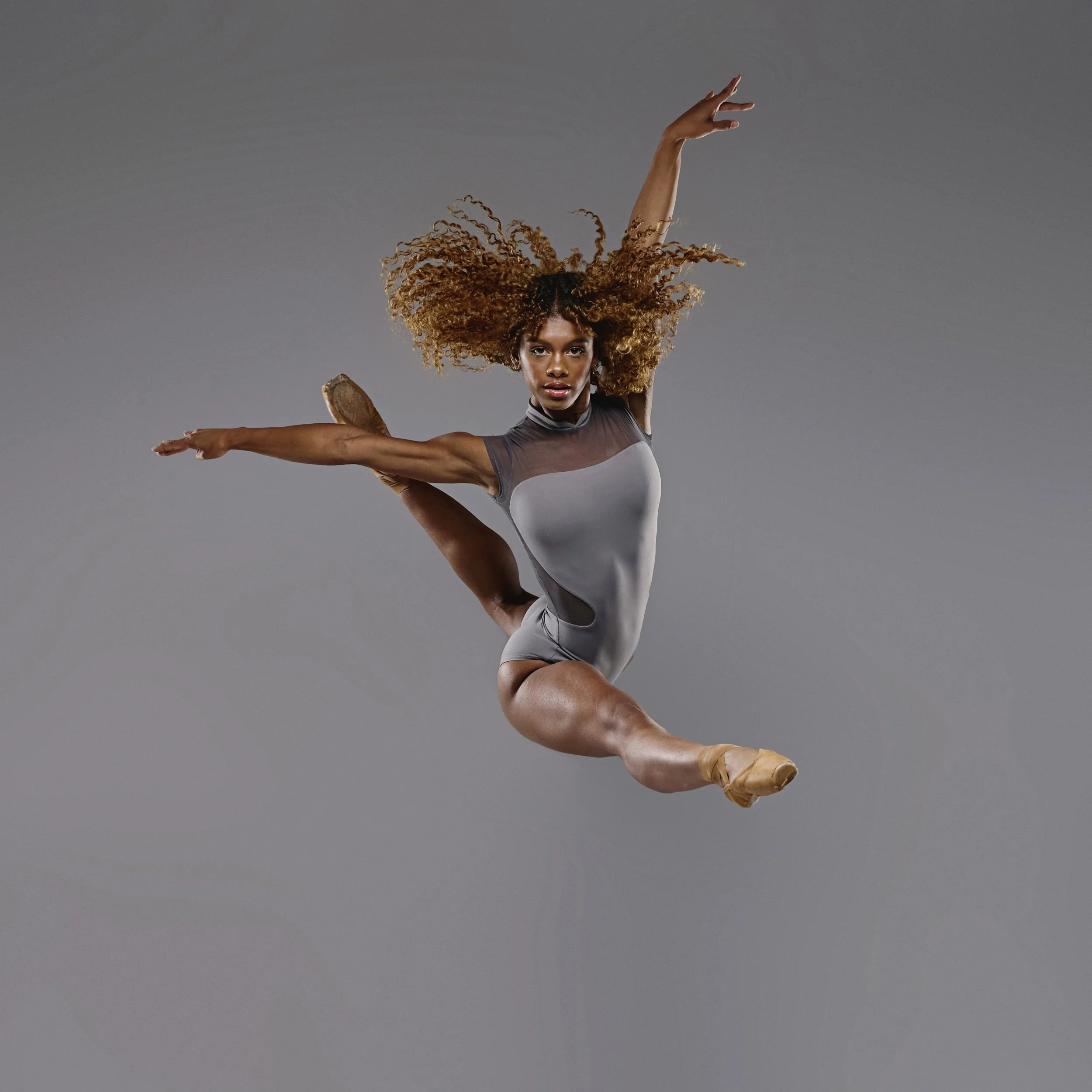
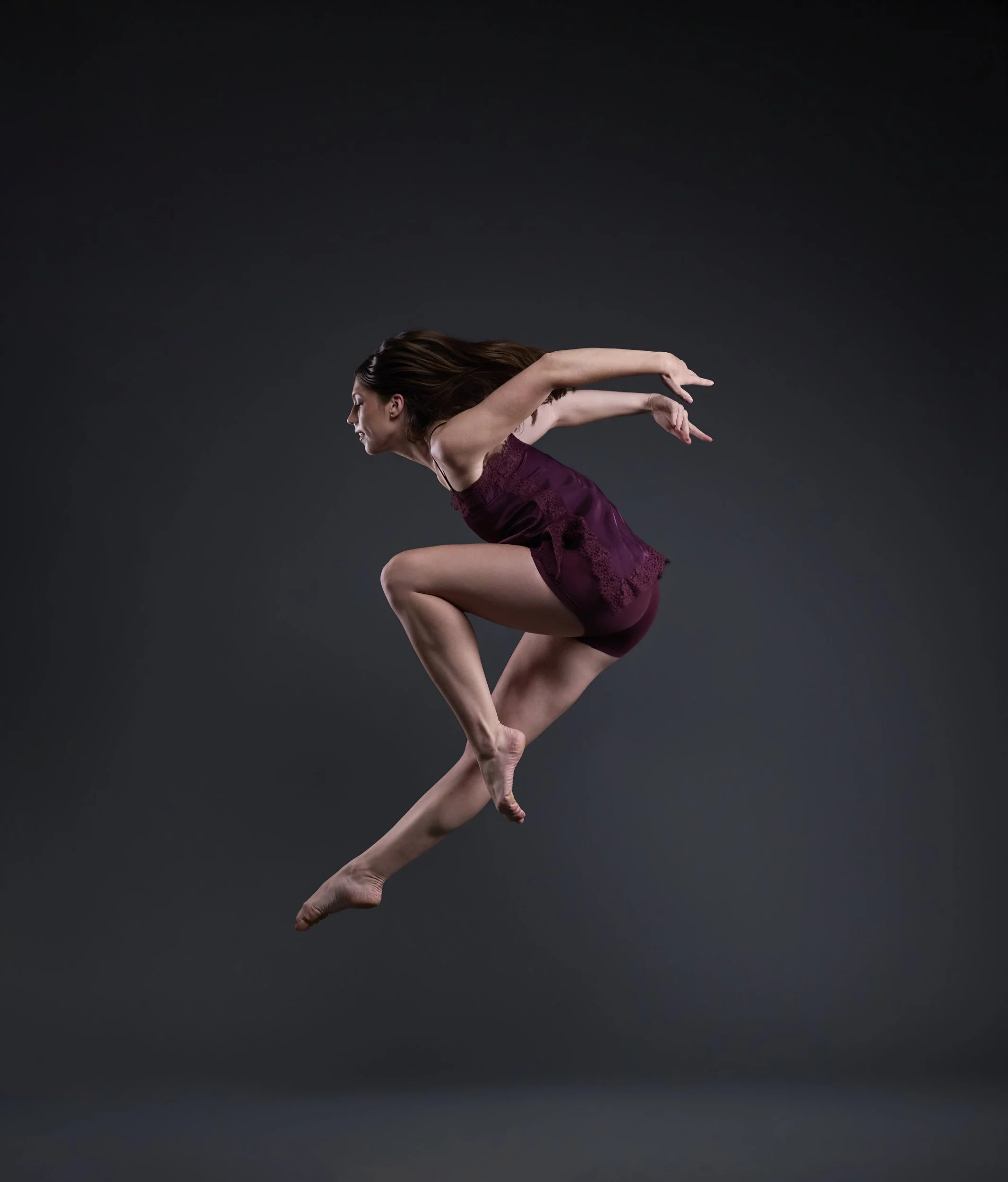
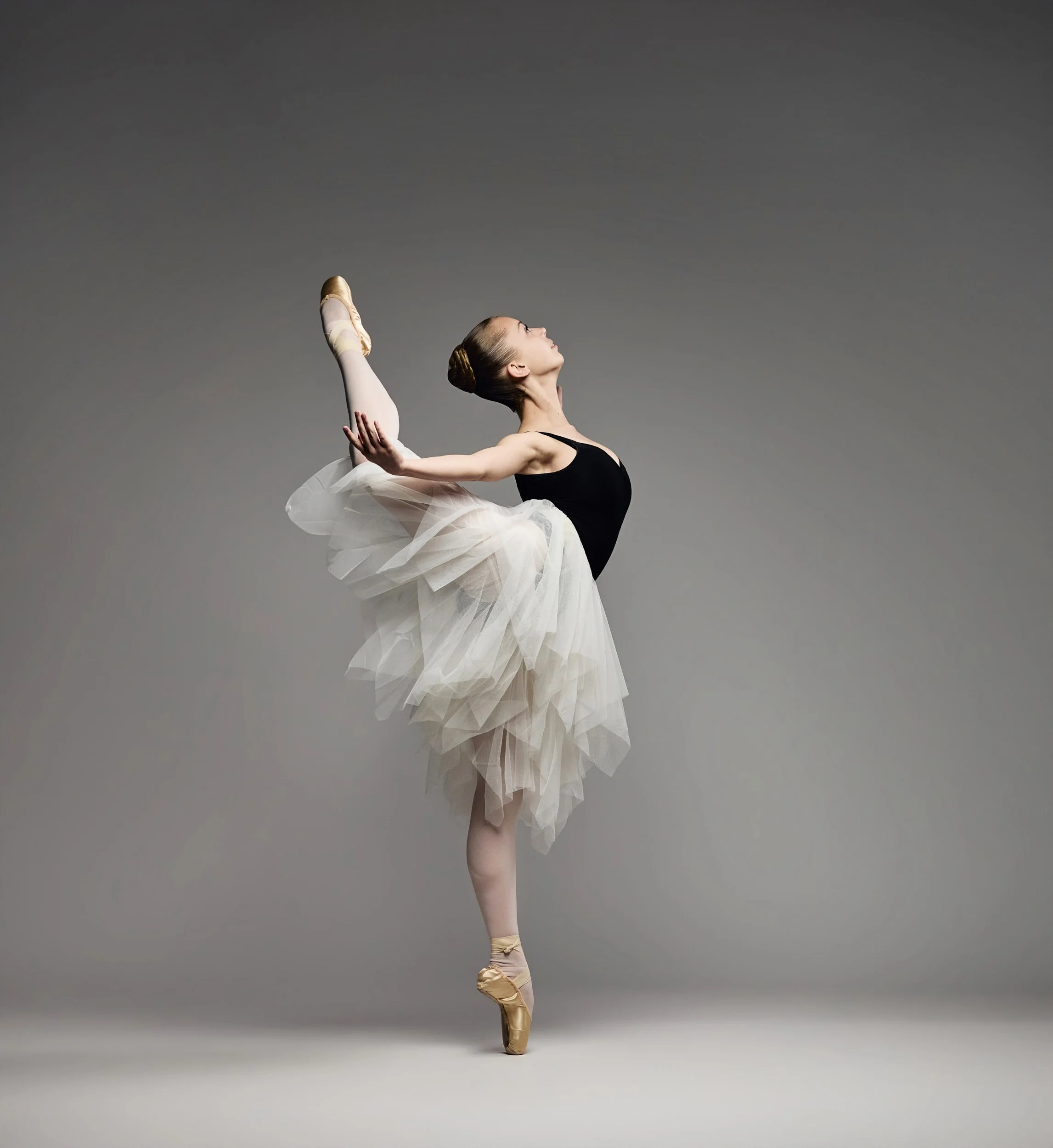
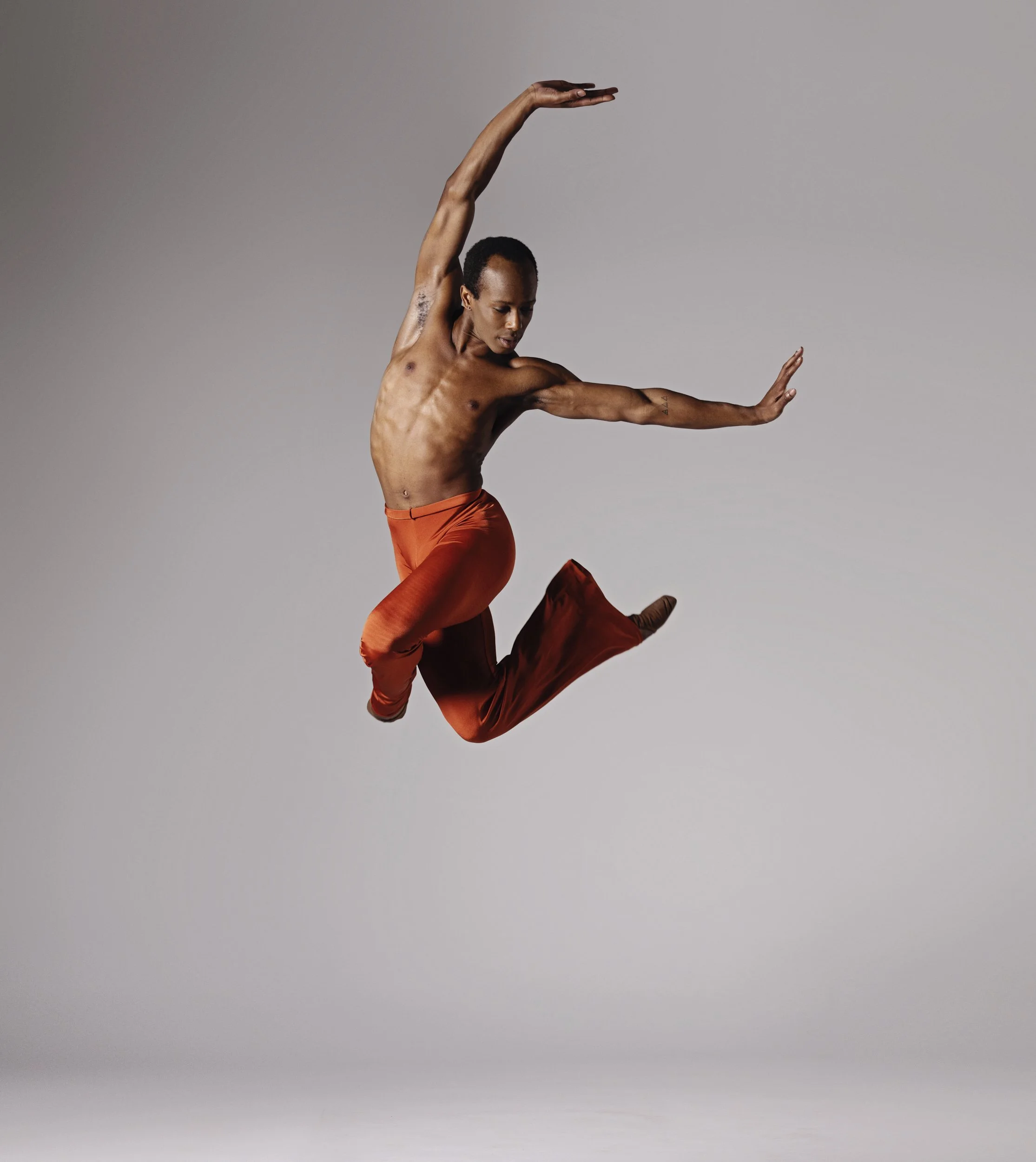
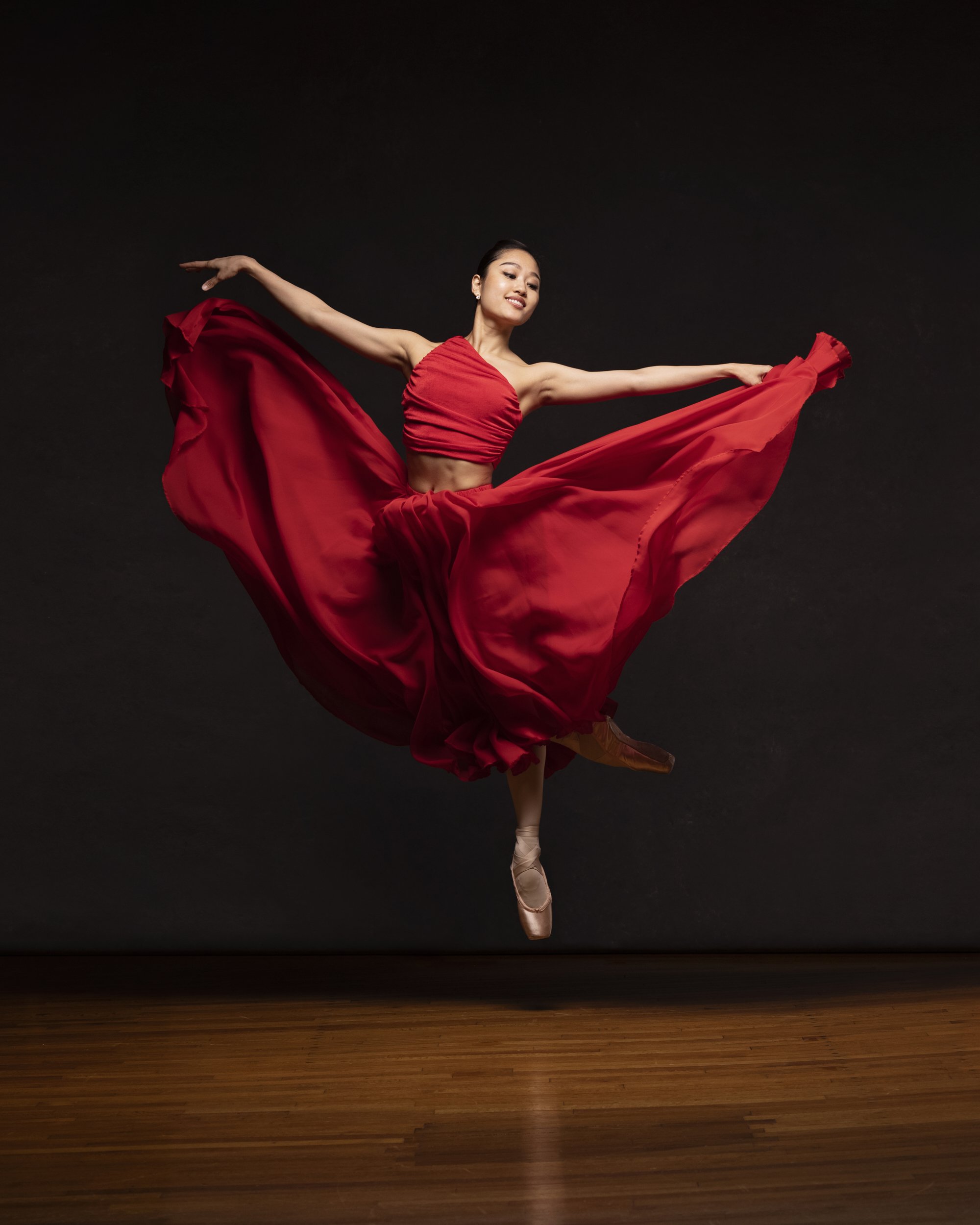
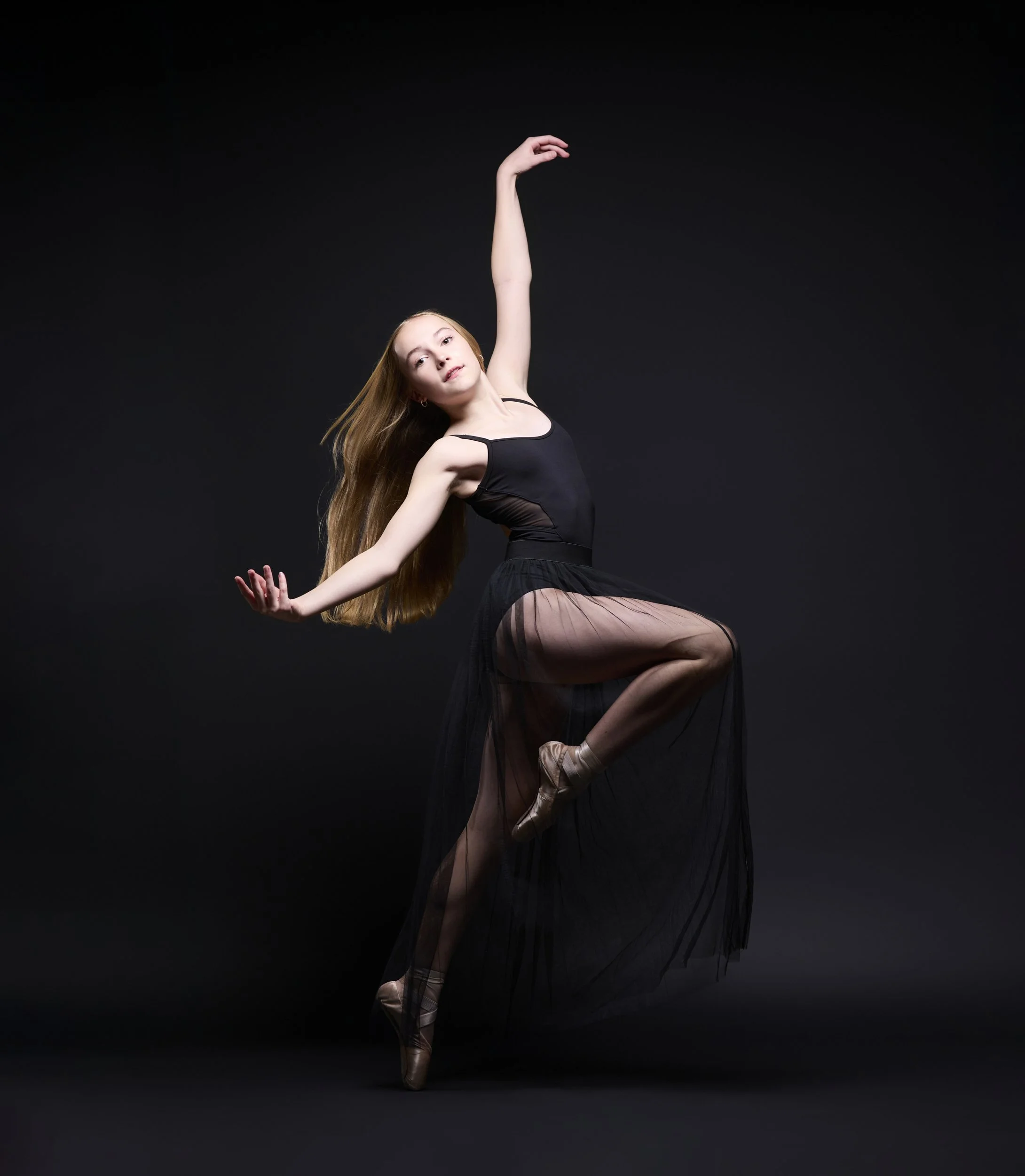
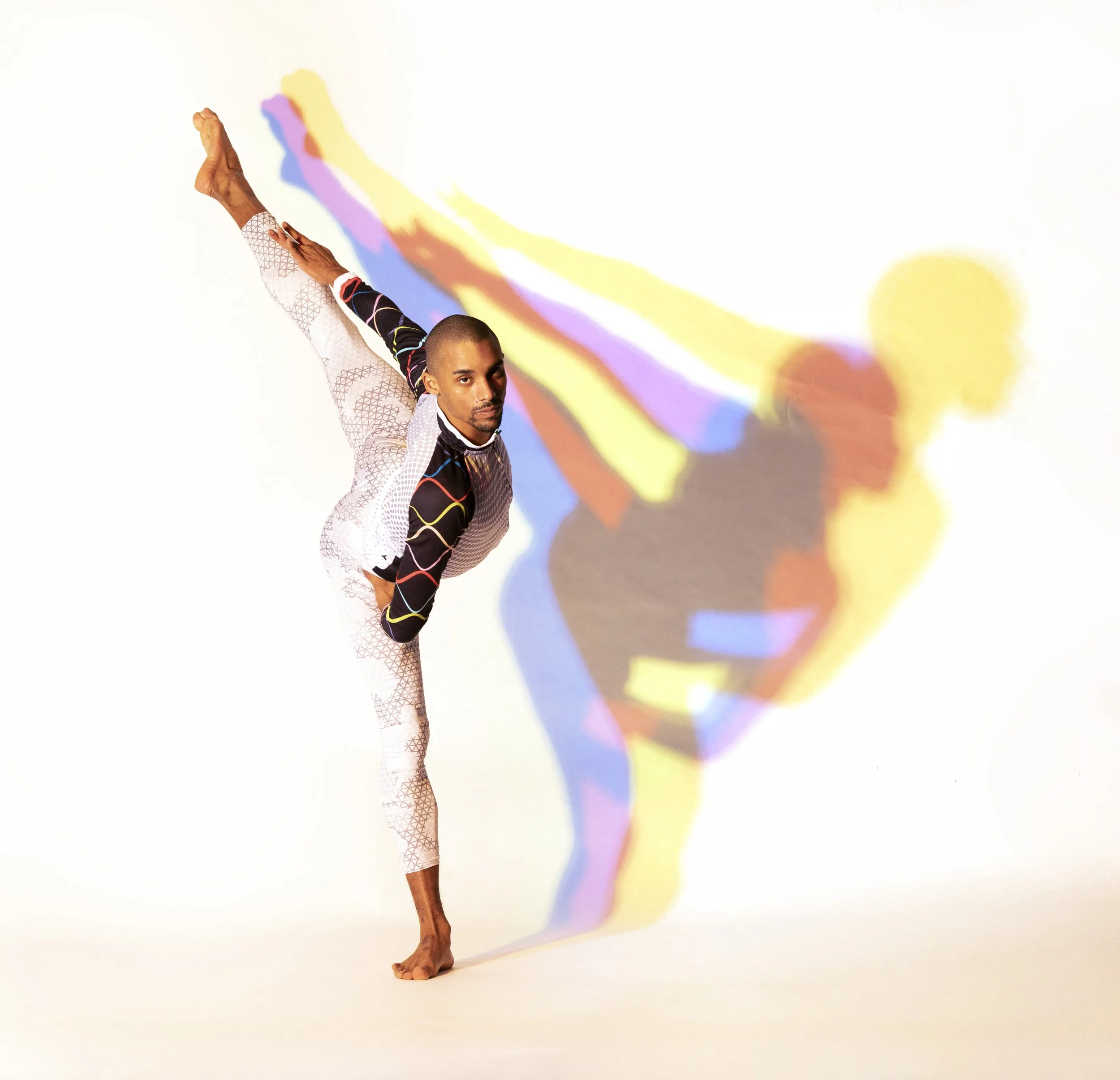
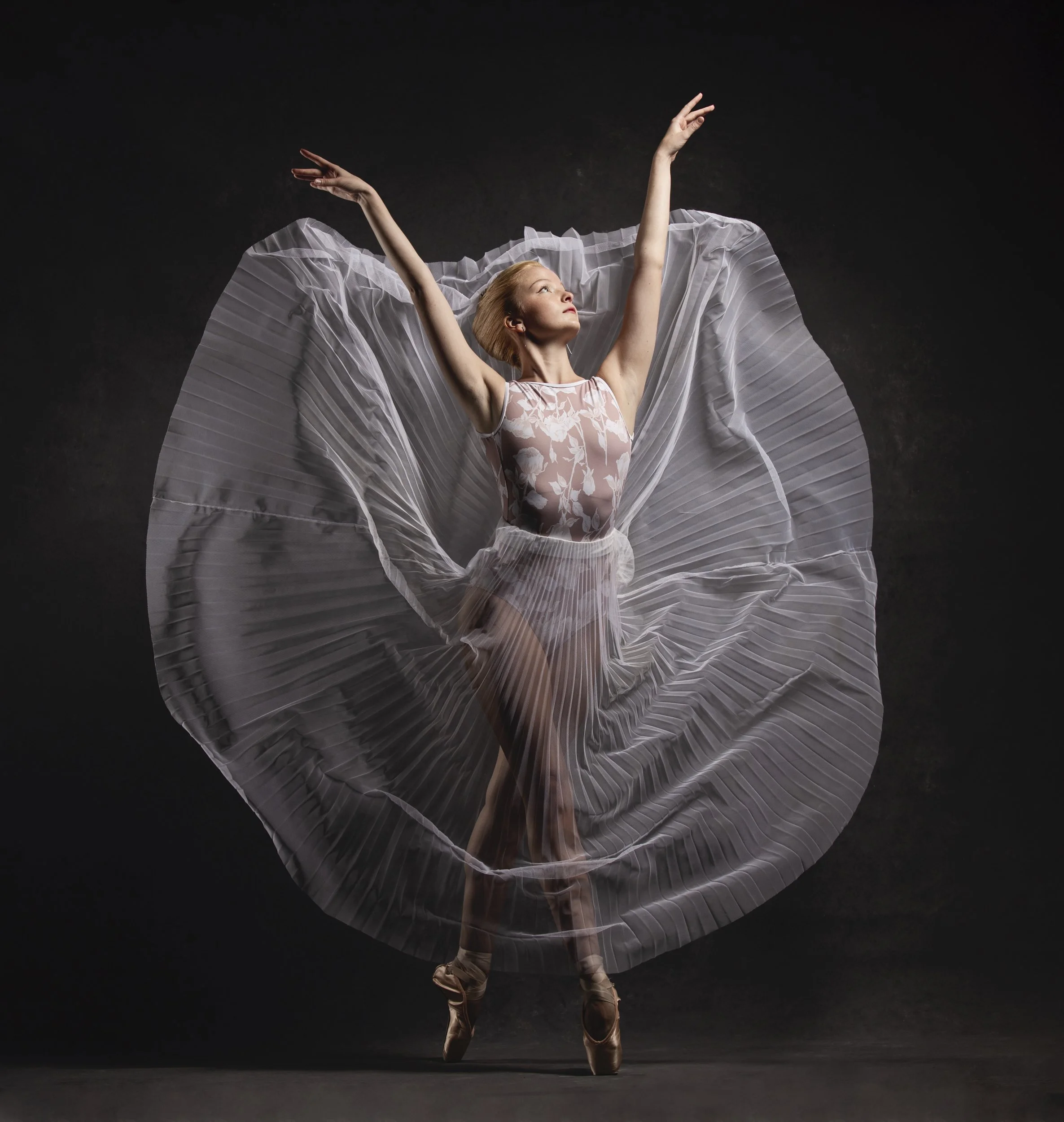
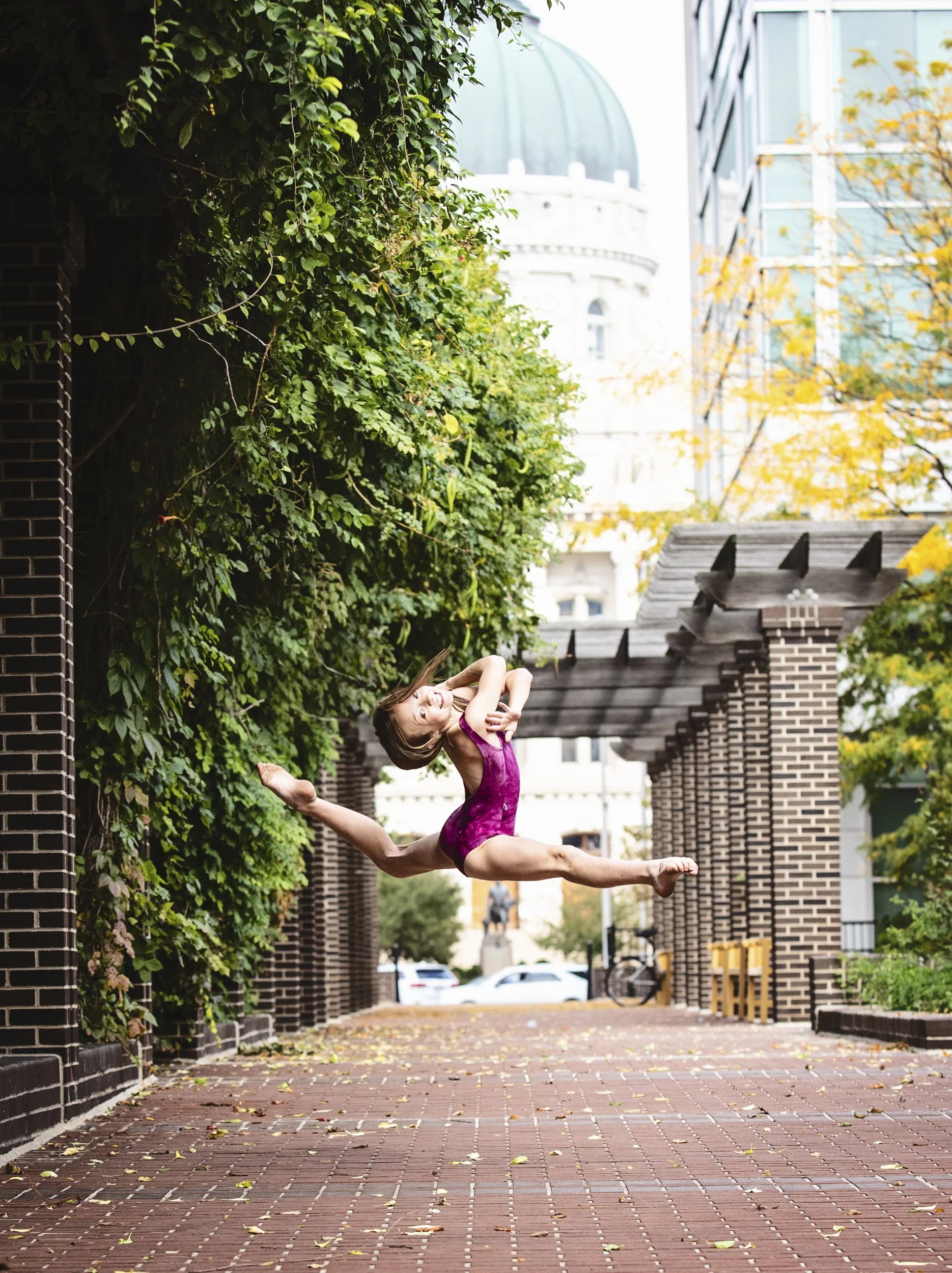
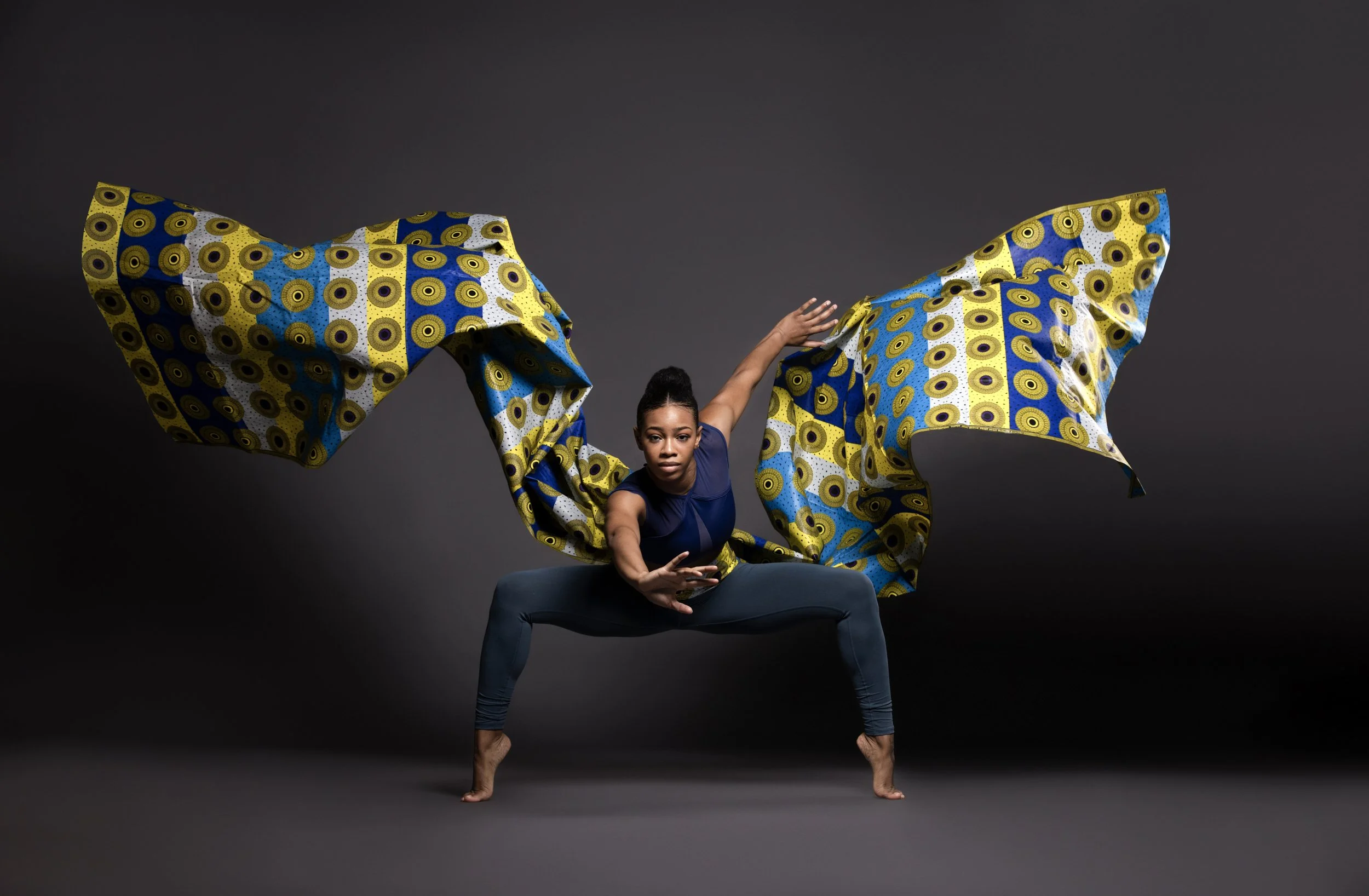
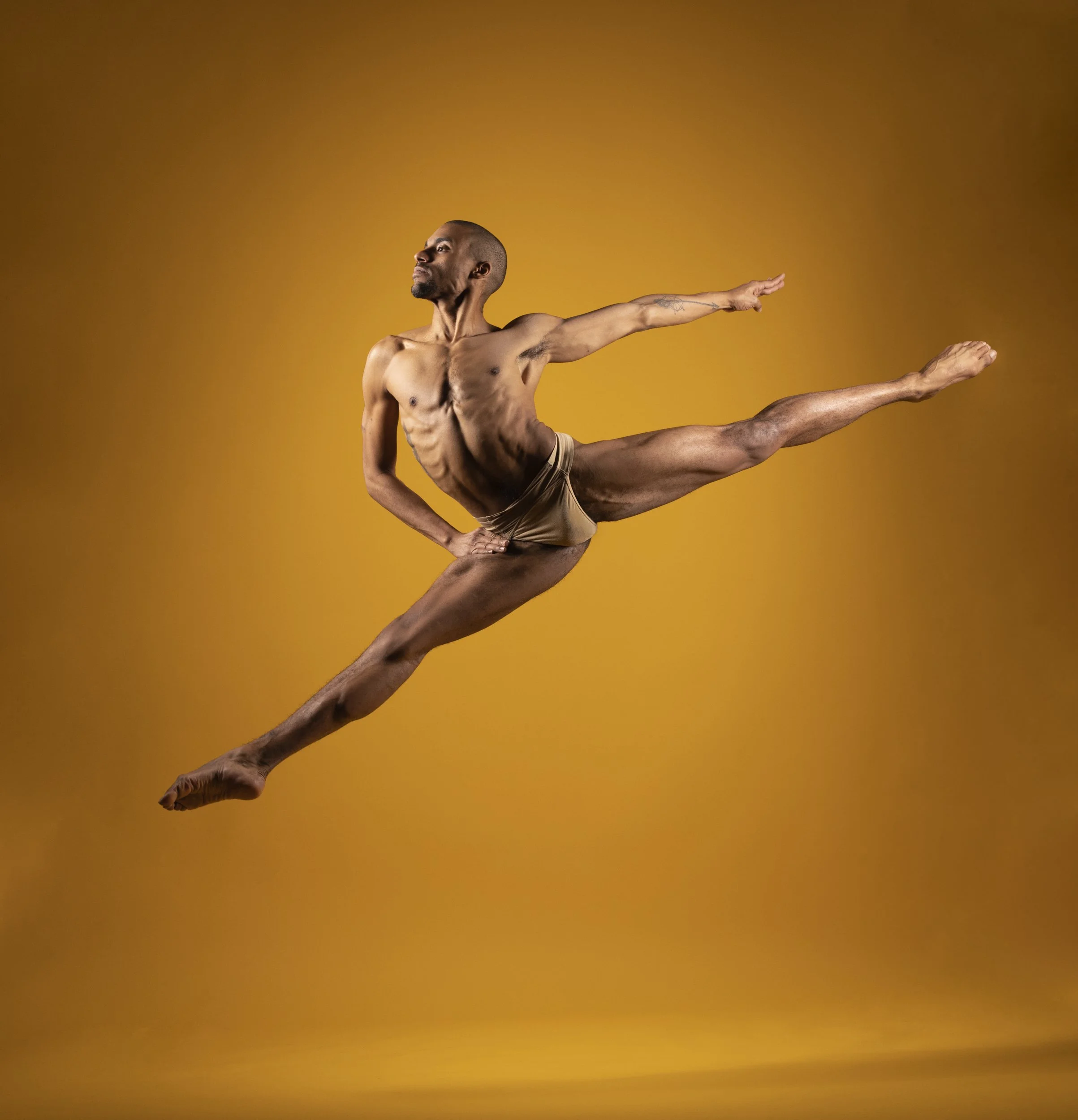
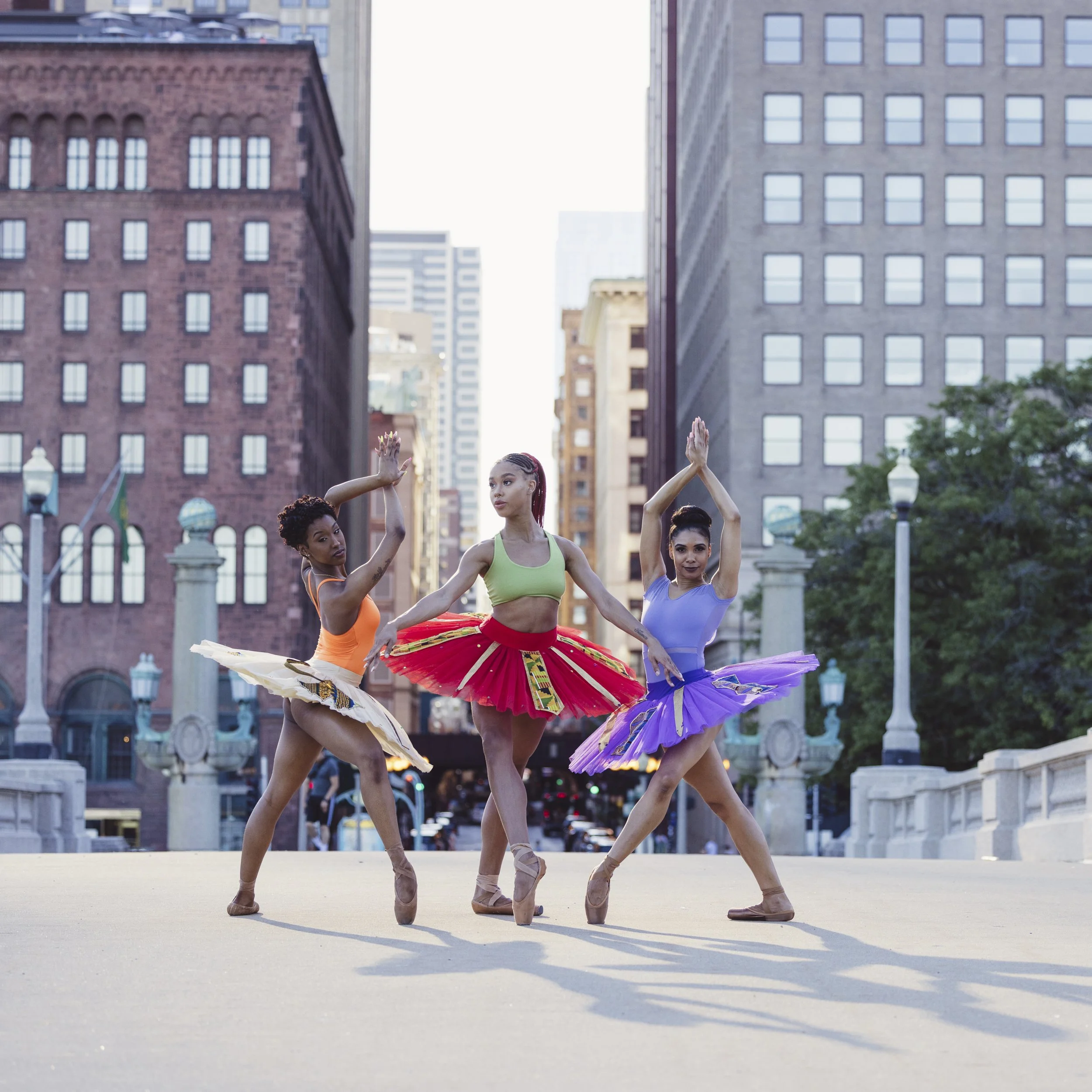
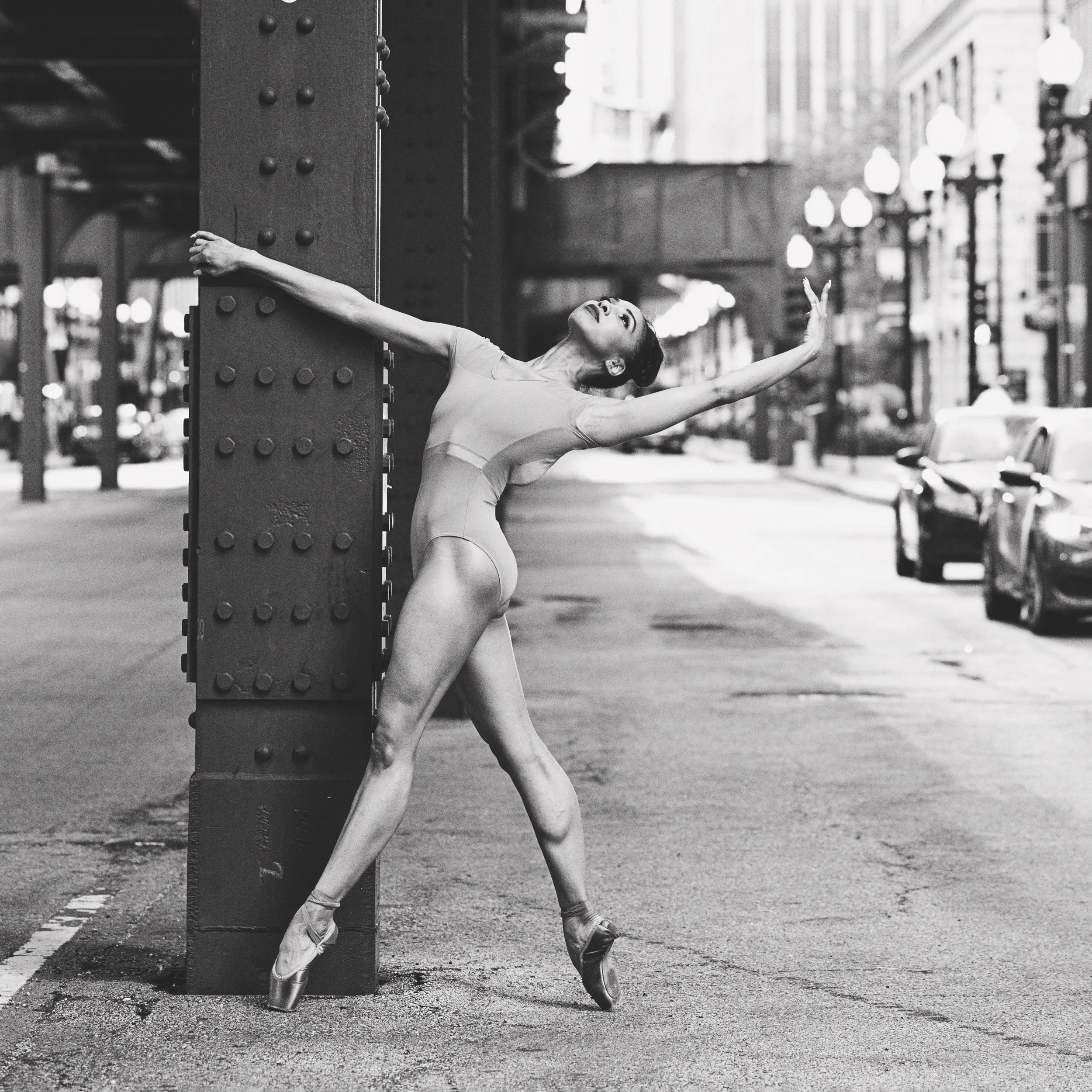
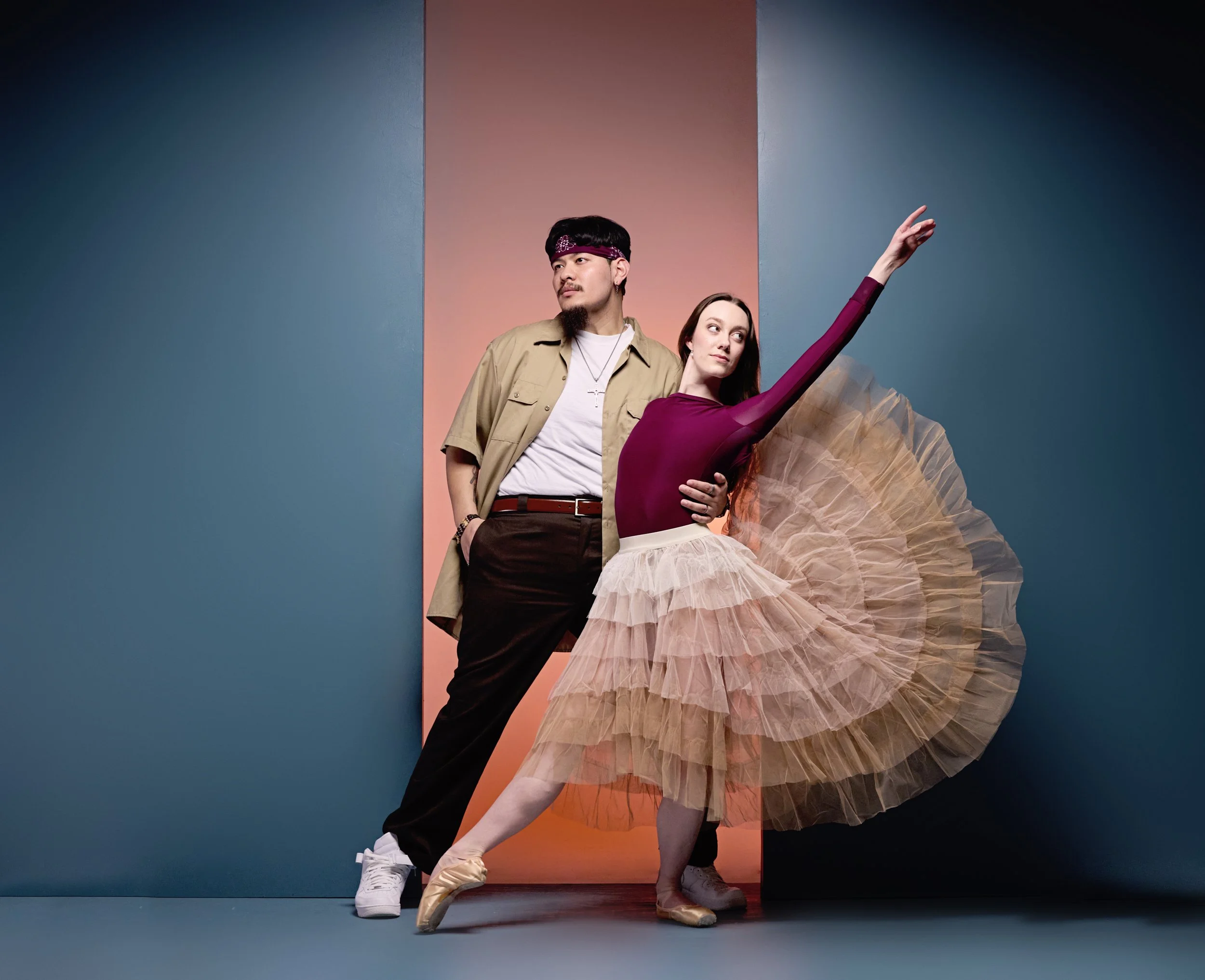
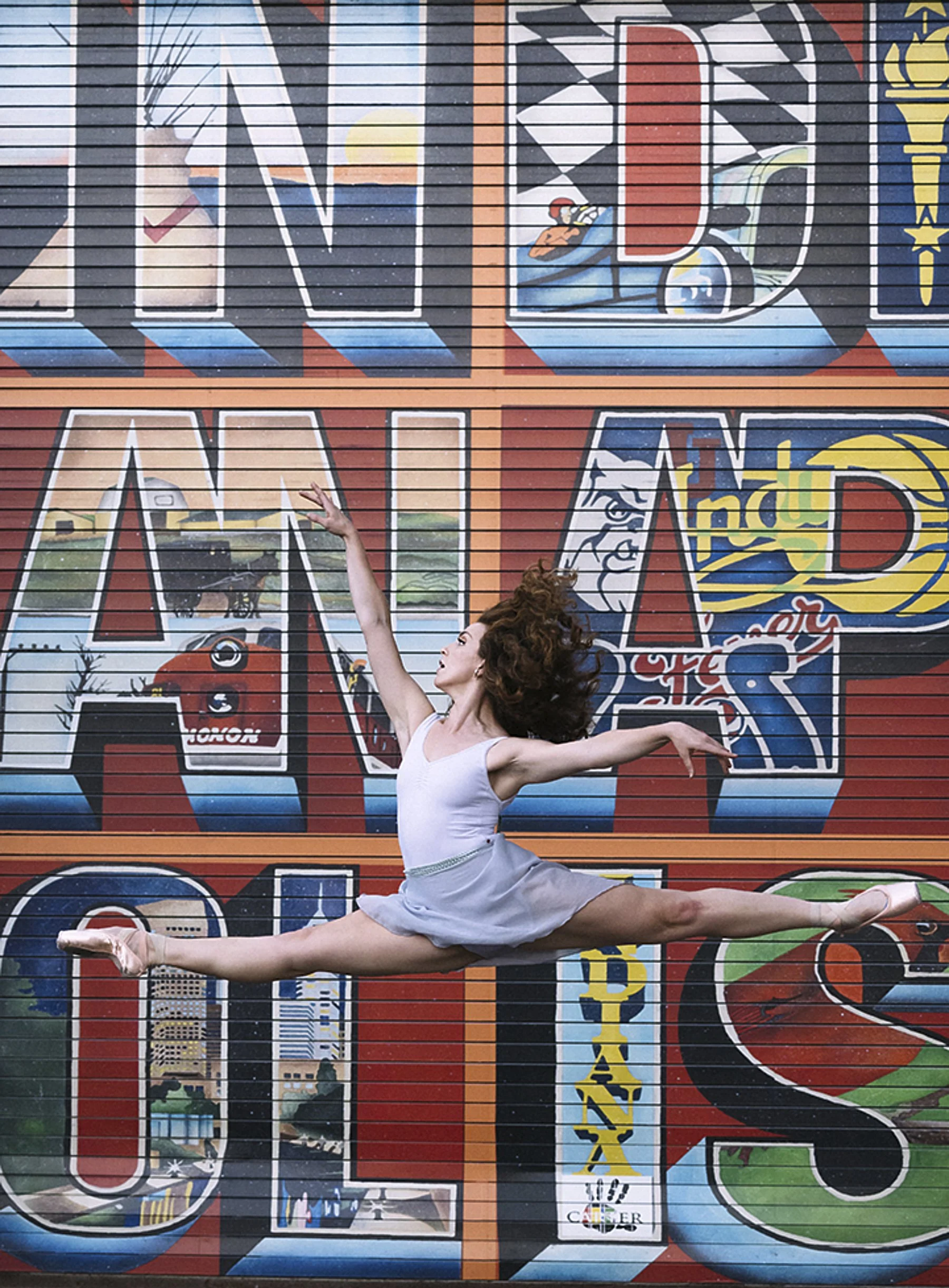
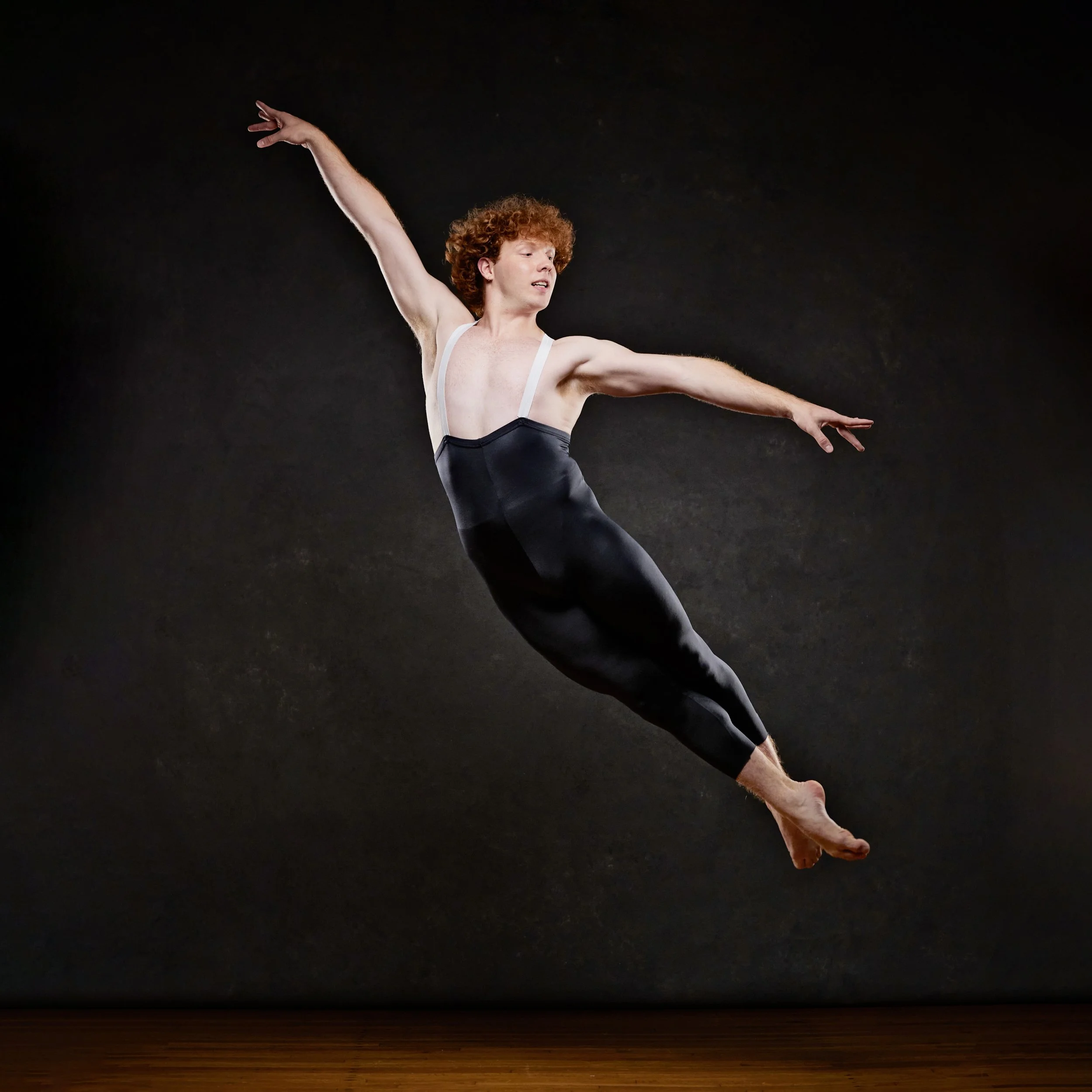
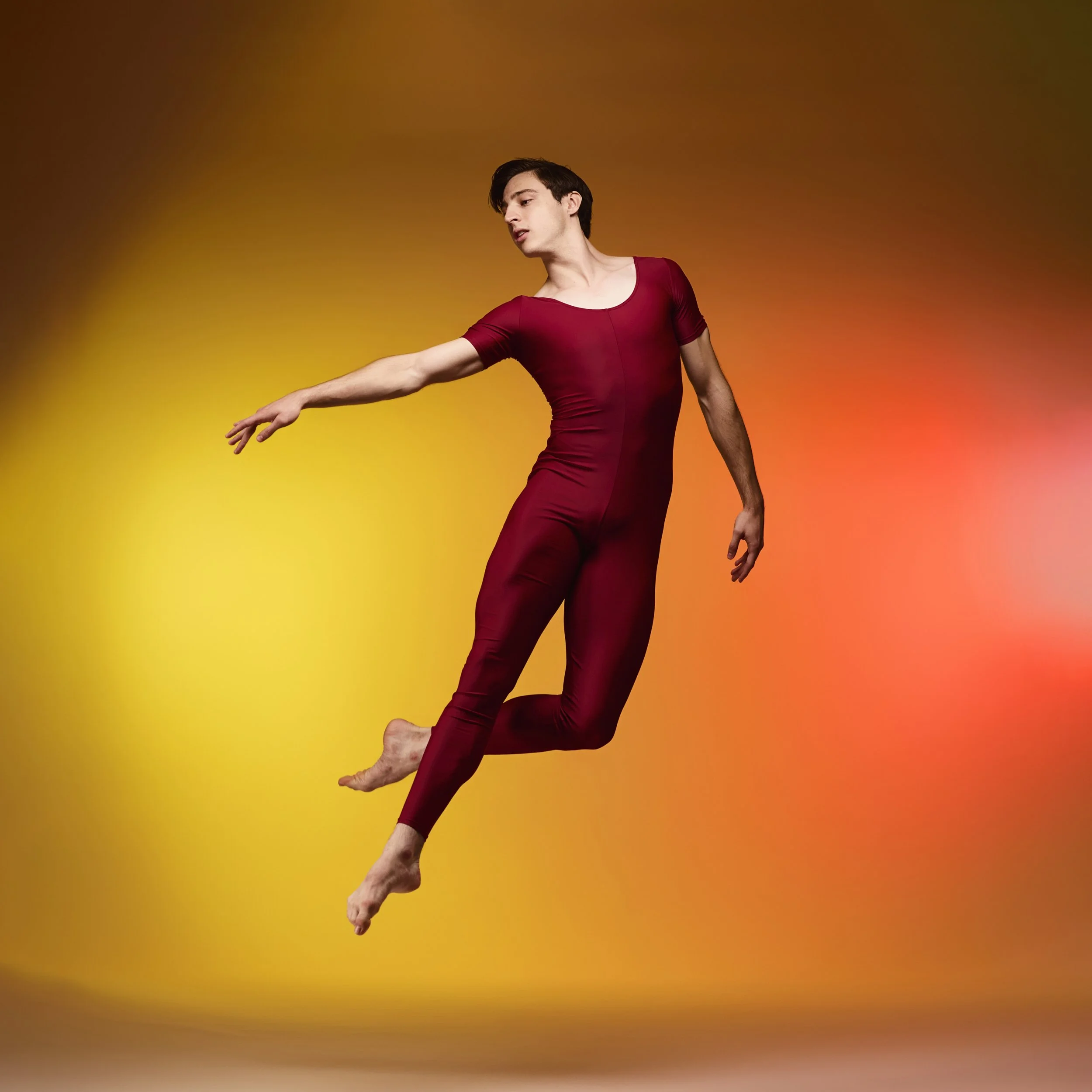
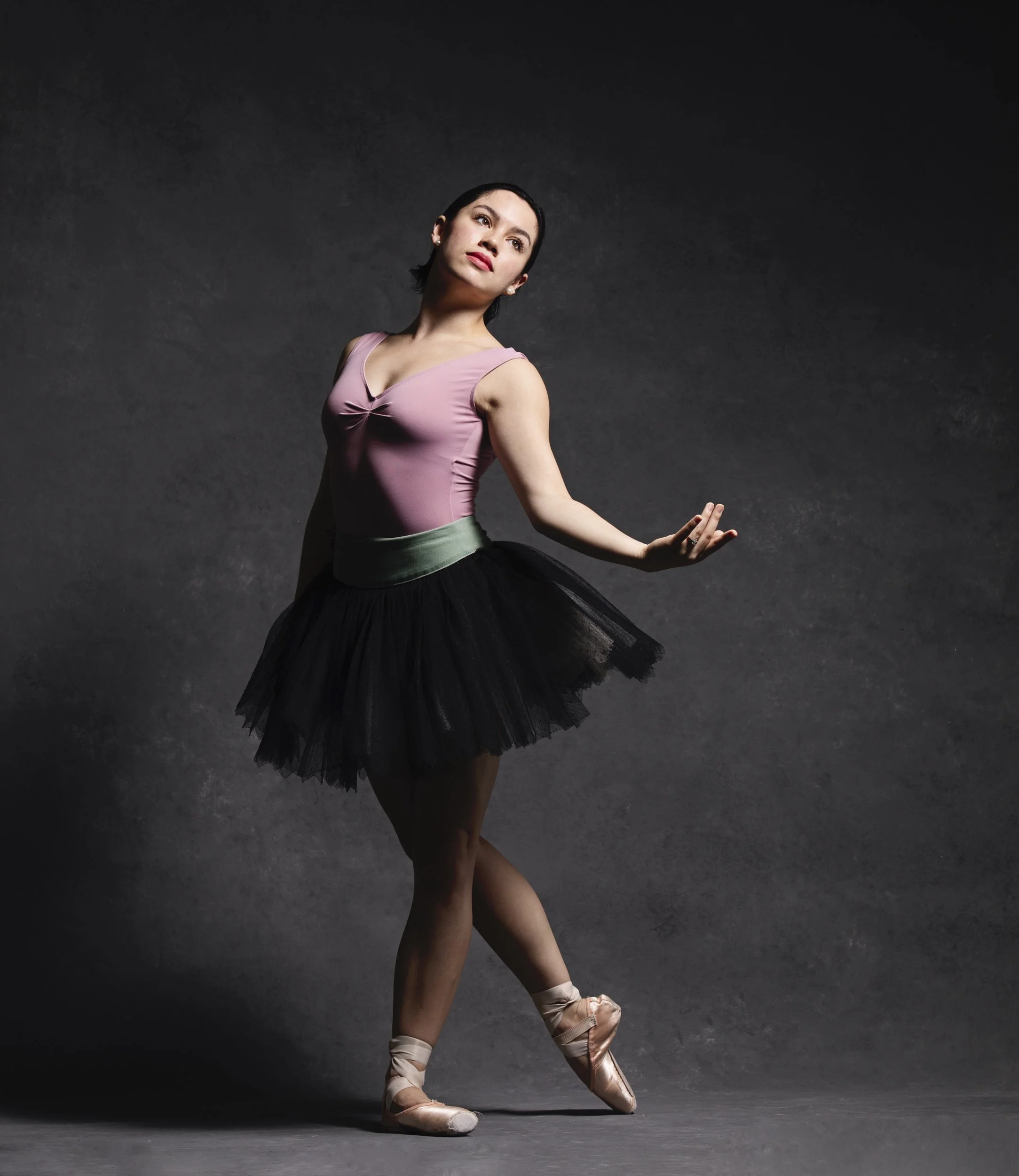
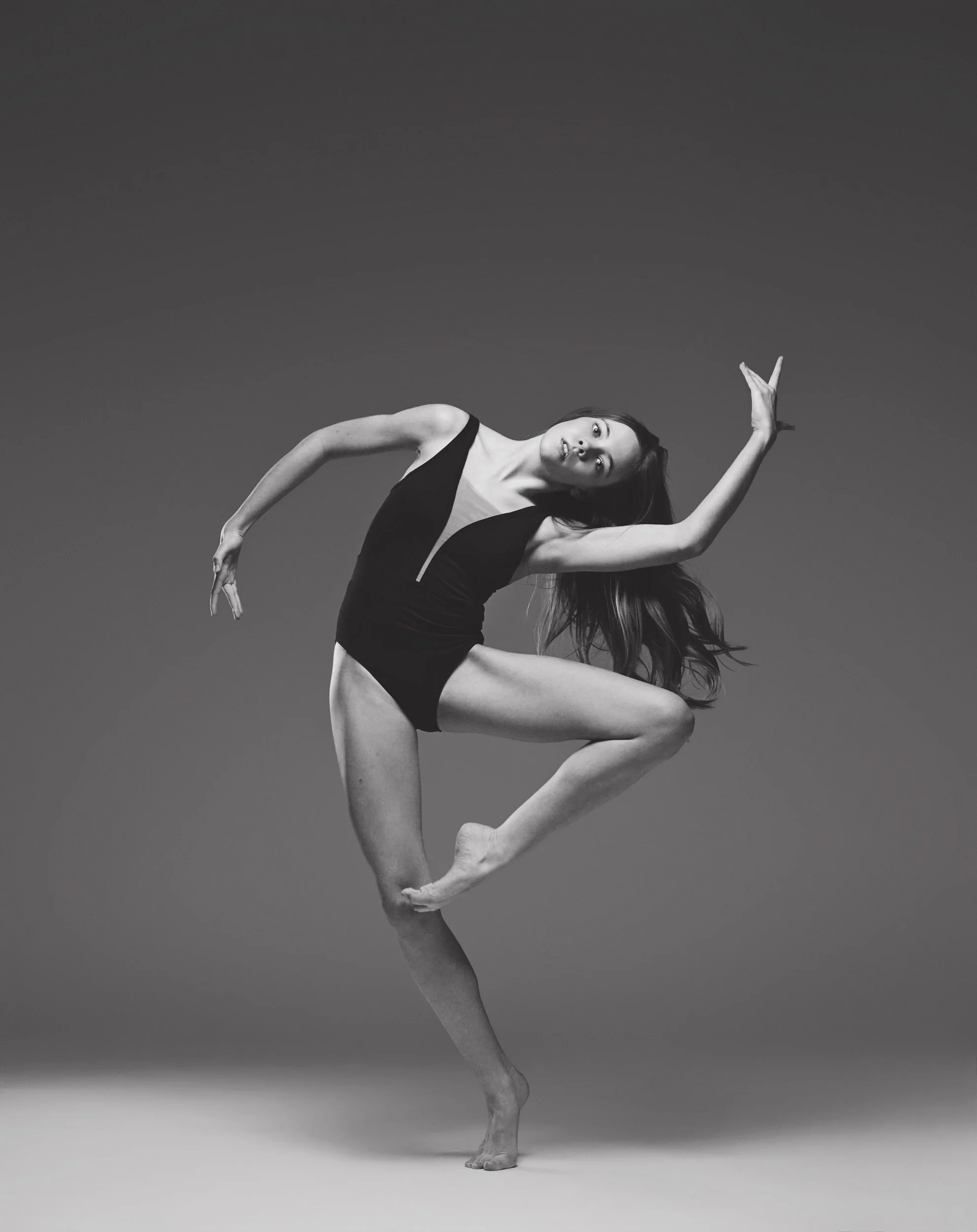
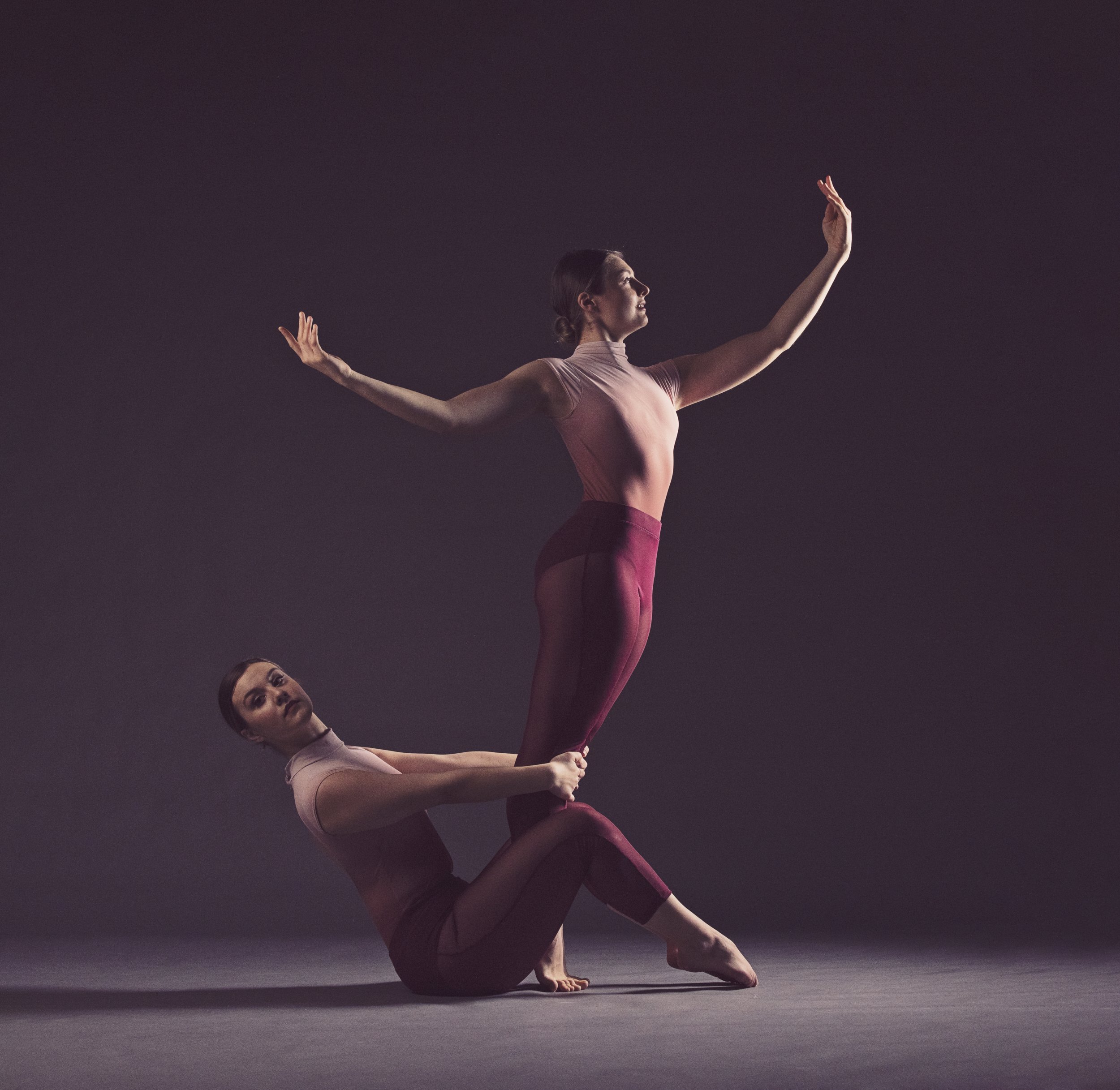
You shouldn't have to jump twenty times to get one good shot.
Most photographers are guessing when they photograph a dancer — waiting for a jump to happen to land in frame, hoping the timing works out, asking you to repeat a move over and over until something looks right. That's exhausting, and it shows in the images.
An 18-year career behind the camera — one that grew into a dance specialty — means knowing the timing before it happens — where the peak of a jump lands, when a turn's line is cleanest, what a beat before or after actually looks like through a lens. Fewer repeats. Less exhaustion. Better images, faster.
A professional dancer works alongside me in the studio. While I shoot, they're giving real-time feedback on line, extension, and technique — the kind of direction that comes from having actually danced, not from having photographed dancers from a distance.
We shoot tethered, meaning every image appears on a screen the moment it's taken. We're not guessing and hoping the shot worked — we're looking at it together, in real time, and adjusting as we go.
The session itself isn't a fixed script. We usually start with poses or shots you already have in mind, and from there, it evolves — a small adjustment leads somewhere better, a moment happens naturally that wasn't planned, and the session becomes a genuine back-and-forth rather than a checklist. That's not a loss of control; it's how the strongest images actually happen.
The studio itself is built for this work: sprung floors so you can move the way you actually move, space to change, and a place to do hair and makeup before we start — not a rushed, borrowed corner of a room.
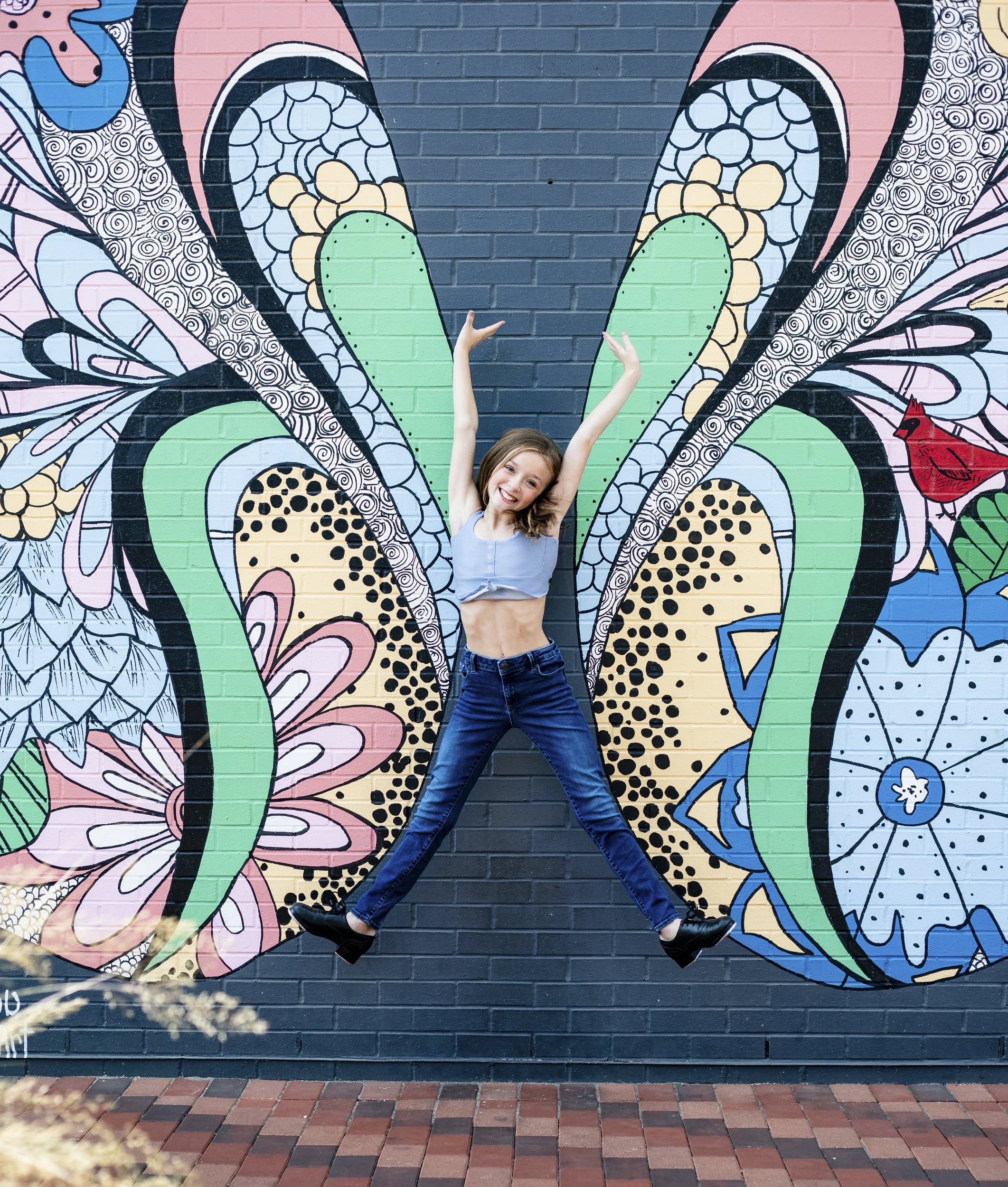
I work with professional dancers and student dancers alike, and it's the same process either way. Same collaboration, same real-time back-and-forth, no scaled-down version for anyone. Student dancers get the same real coaching on technique, line, and how to look their best in front of the camera as everyone else who walks into the studio; nobody's getting less attention because they're younger or newer to this. And you don't need a specific reason to book — senior photos, audition photos, and mini sessions offered at select times throughout the year are a few reasons dancers come in, not the only ones. Any time, any reason, we build the session around what you actually want captured.
The goal, plainly: you leave feeling confident and proud of what we made together — not just photographed, but seen as the artist you are.
What a Session Can Look Like
Every dancer who walks in needs something a little different, so sessions aren't sold as one fixed package — they're built around what you're actually trying to get:
Mini sessions — shorter and more focused, a way to get real images without committing to a full production.
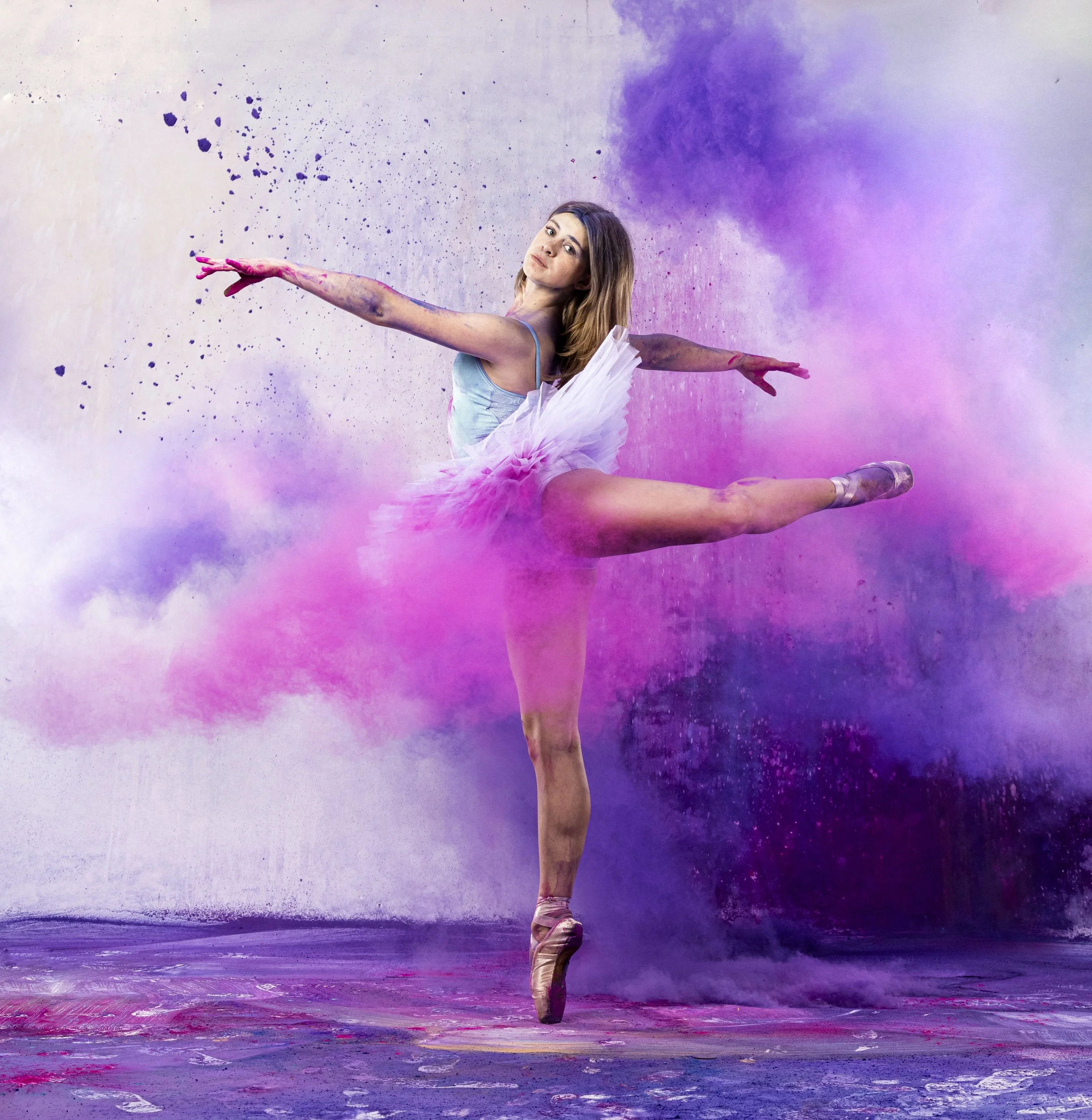
Portfolio & creative sessions — a full studio production, including effects work like smoke or powder for something more artistic.
Audition sessions — built around what a specific application or casting call actually needs. Learn more here: "What to Expect at an Audition Session"
Dance senior sessions — marking a season or milestone, on their own or paired with a portfolio session.
There's no set price list, since length, location, and scope all shape what a session actually involves. A quick call gets you a real number, not a guess.
How It Works
Schedule a quick call. We'll talk through what you need and what kind of session fits.
Capture your session. In the studio or on location — real-time, collaborative, shot tethered.
Receive your images. Edited files, ready to share, print, or submit.